
Laboratories
Mechanical/Industrial Automation Laboratory
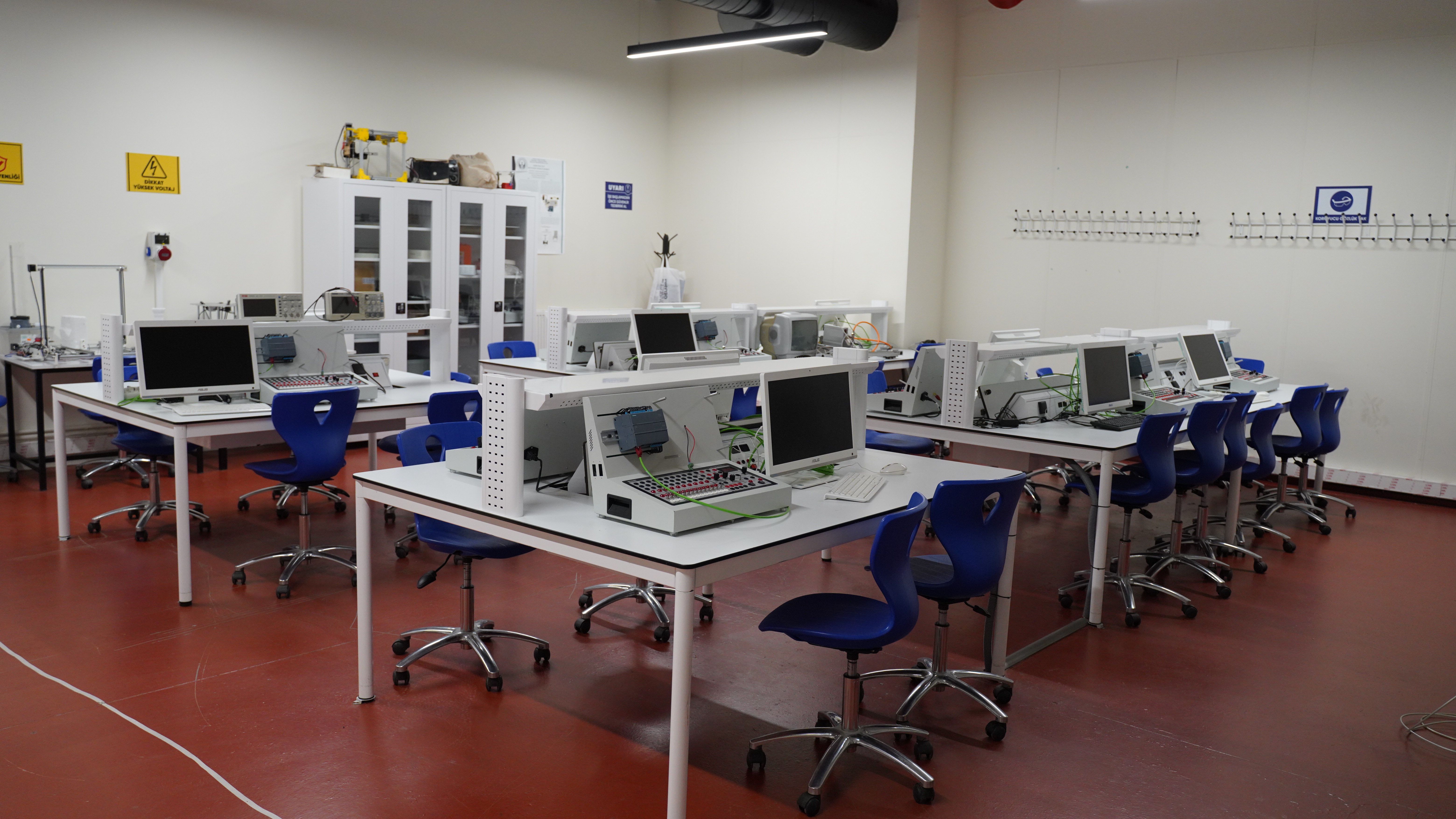
In the Mechanical/Industrial Automation Laboratory, PLC (Programmable Logic Controller) kits, Festo sensor kits, servo motor drive technologies, mobile robots, systems for industrial automation (transfer, assembly, distribution, processing, and sorting stations), control systems, and hydraulic, electrohydraulic, and pneumatic-electropneumatic systems are available. In addition, students can use the 3D printer in the lab to produce various parts for robots, drones, and other applications.
In our laboratories, All-in-One computers equipped with 6th-generation Intel processors make it easy to program various development boards and run a variety of simulation programs. In line with advancing technology and to meet industrial needs, we implement industrial automation applications.
Click here to view the equipment list for the Mechanical/Industrial Automation Laboratory.


Machining-Chipless Manufacturing Methods Laboratory
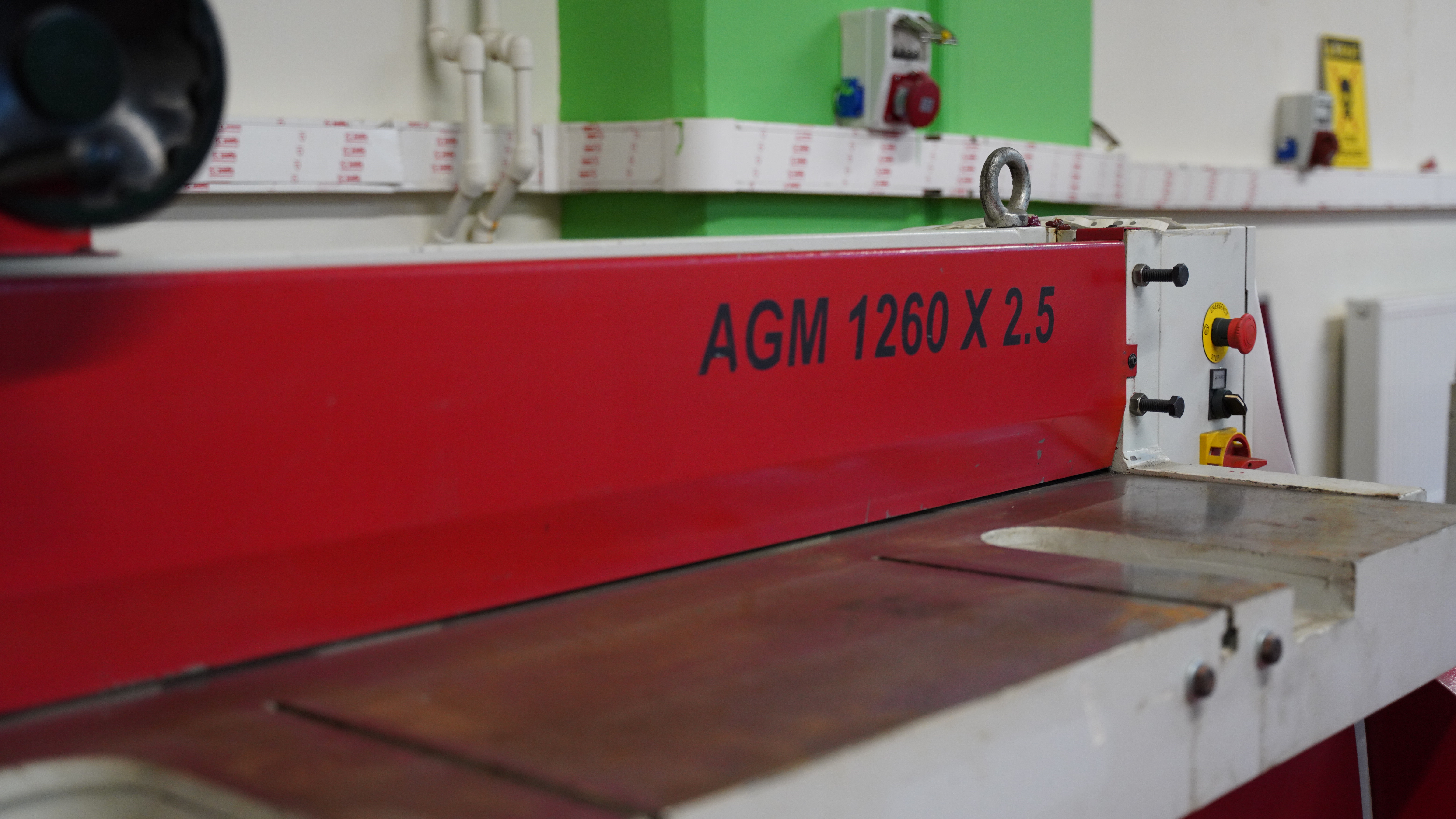
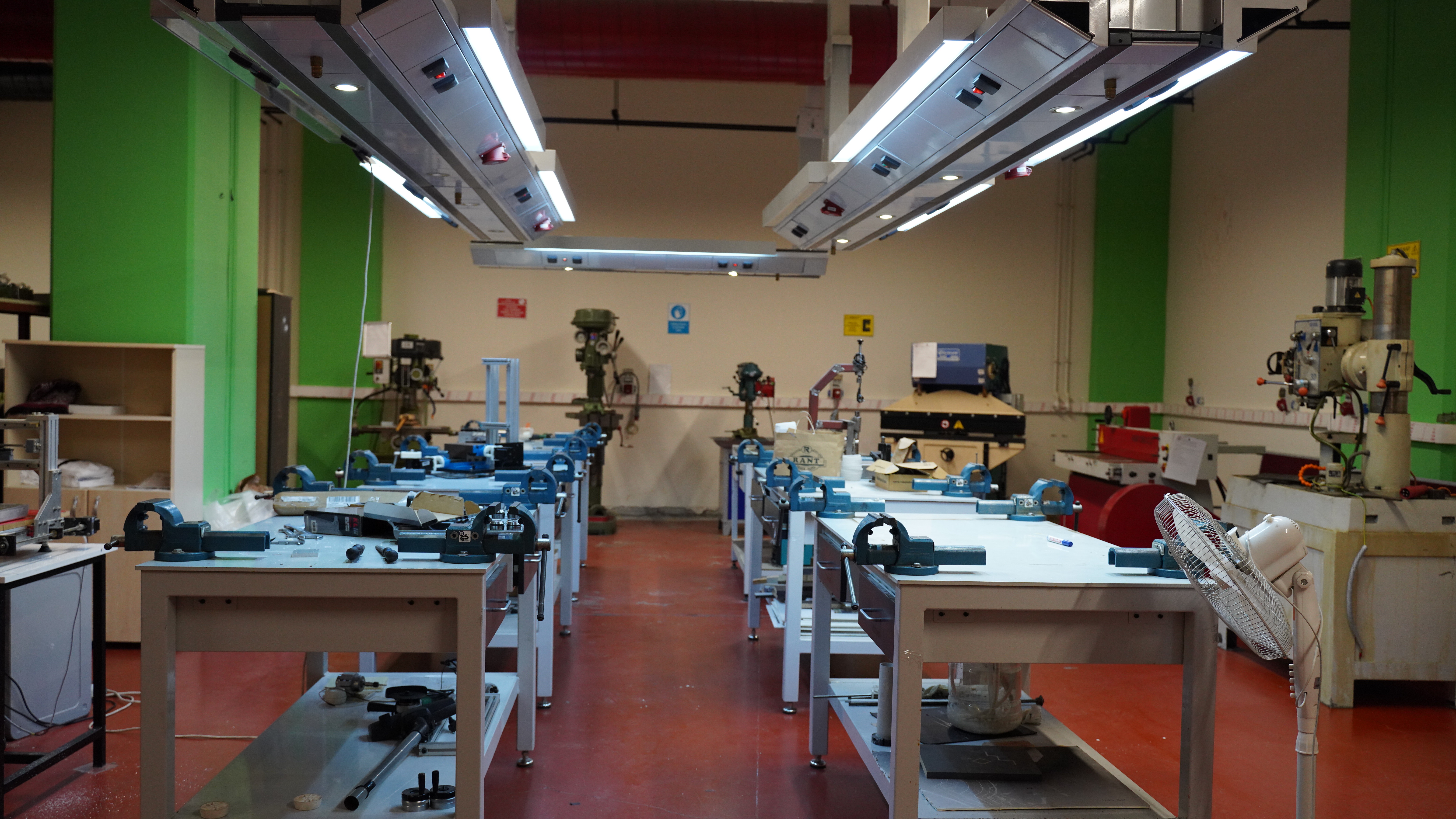
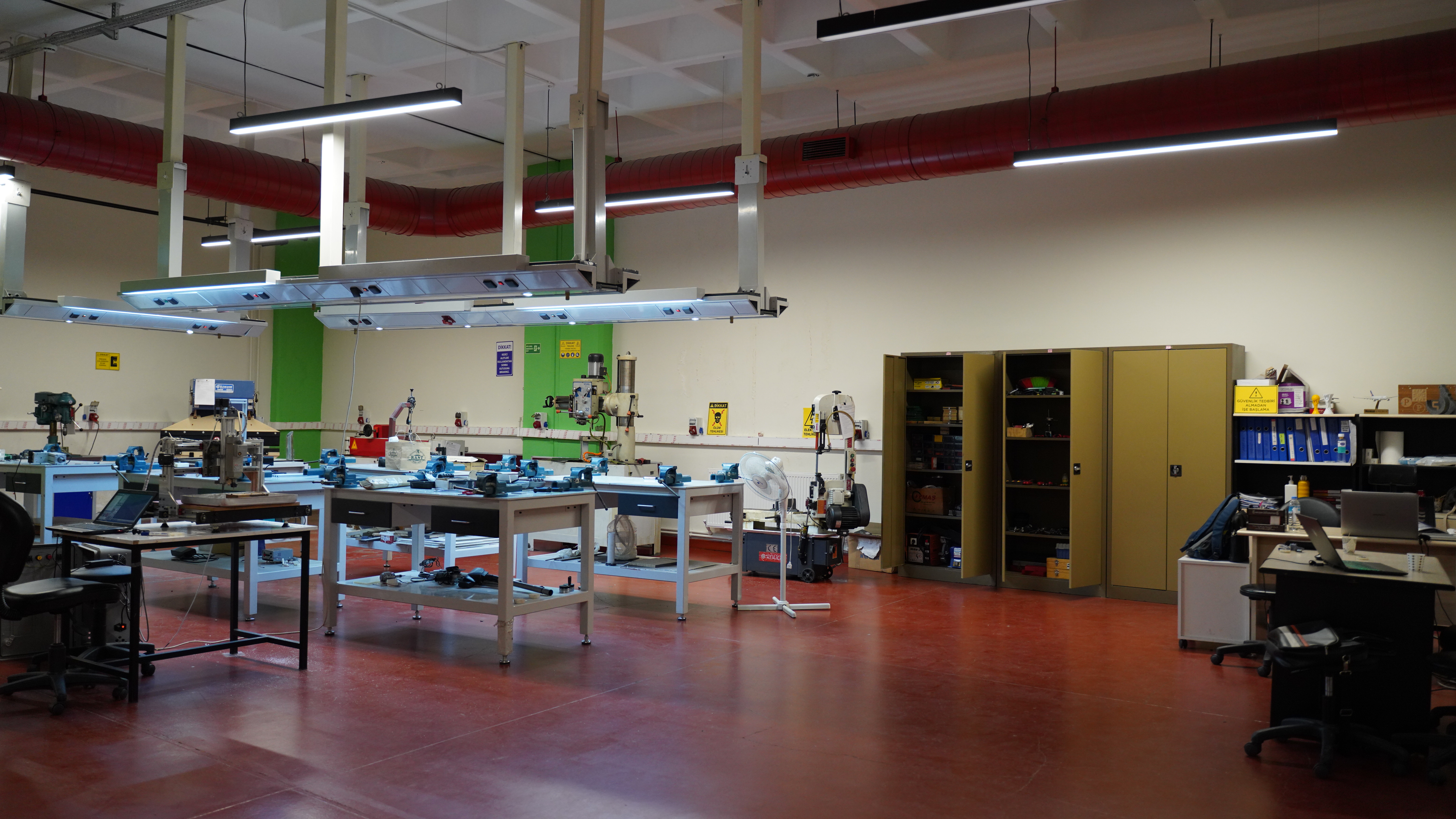
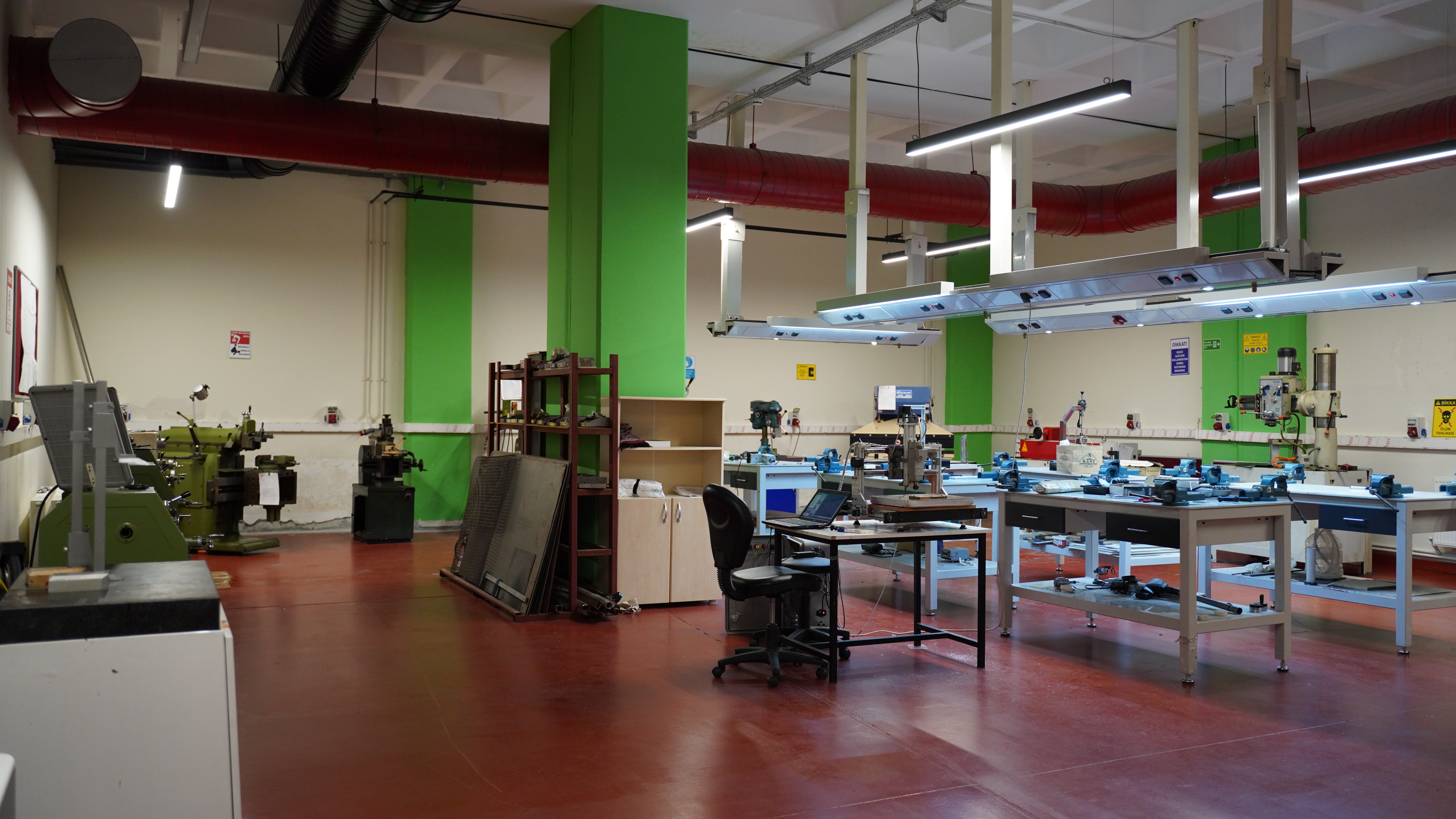
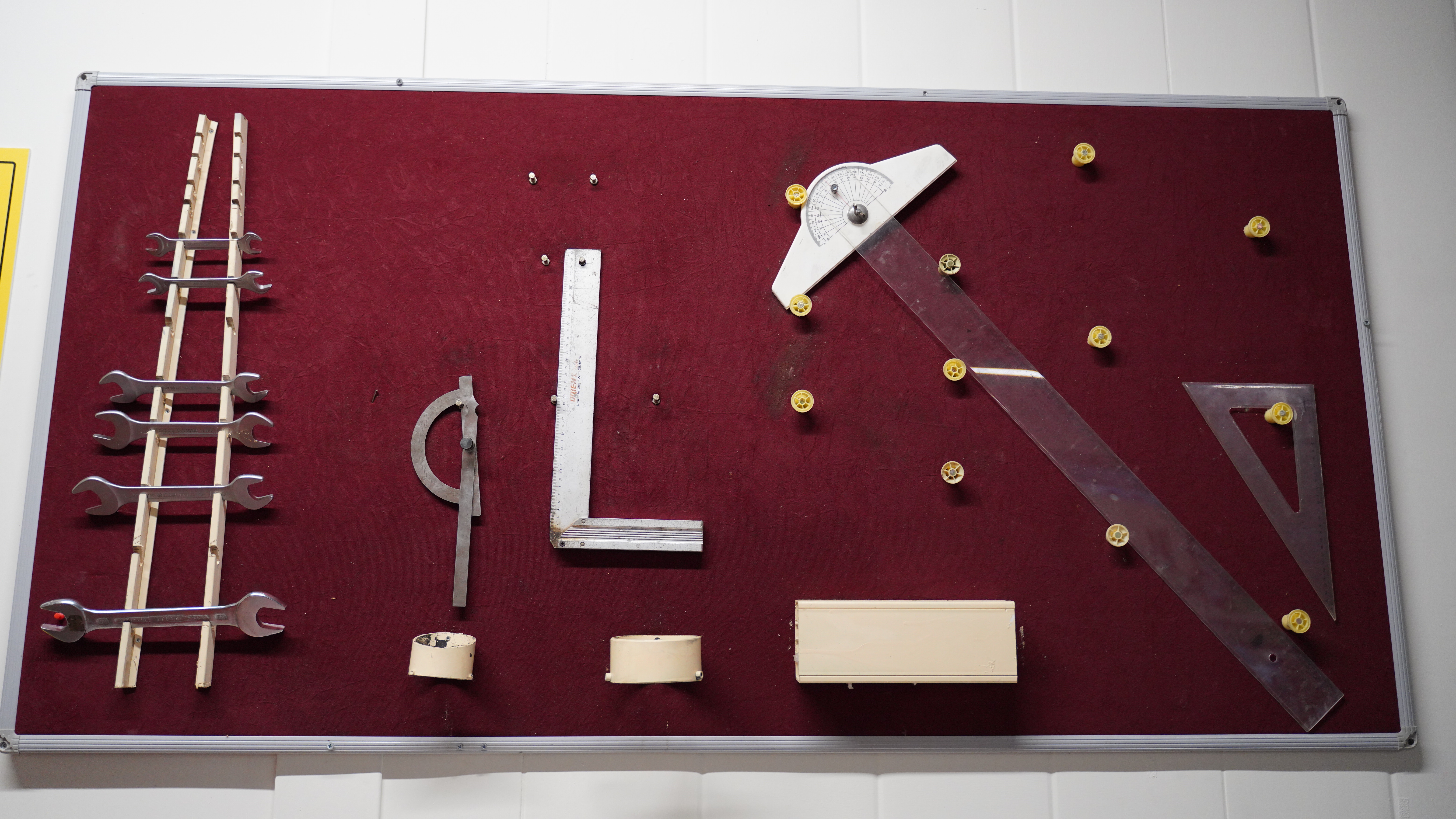
Reflecting the “mechanical” nature of Mechatronics Engineering, this laboratory provides workshop activities involving production technologies such as formers, bending and pressing machines, lathes, drilling machines, radial drill presses, cutters, guillotine shears, saws, grinding machines, and welding machines. In this laboratory, students can bring their own designs to life while also having the opportunity to work on their final projects.
Click here to view the equipment list for the Machining-Chipless Manufacturing Methods Laboratory.
Electronics Laboratory
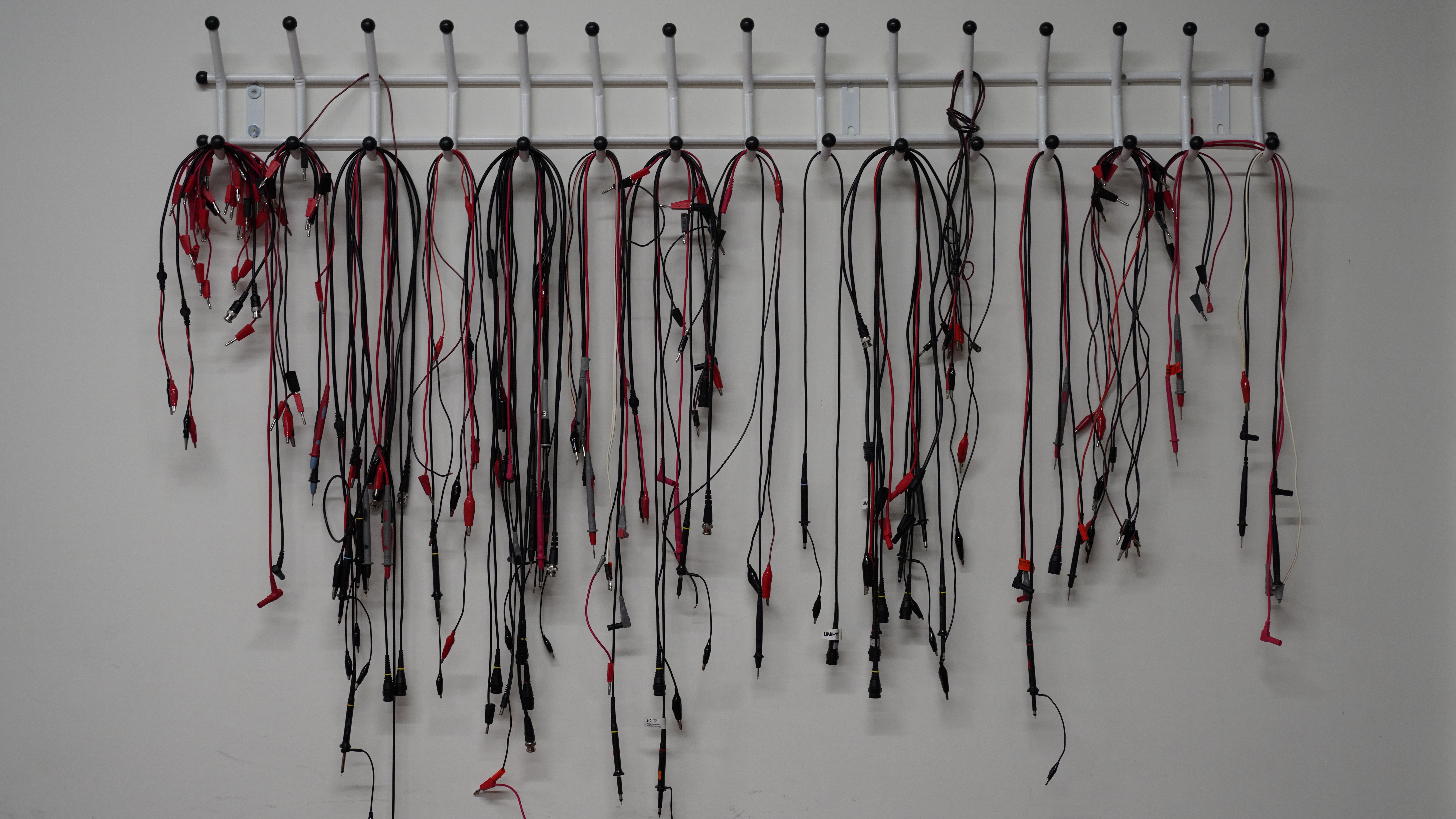
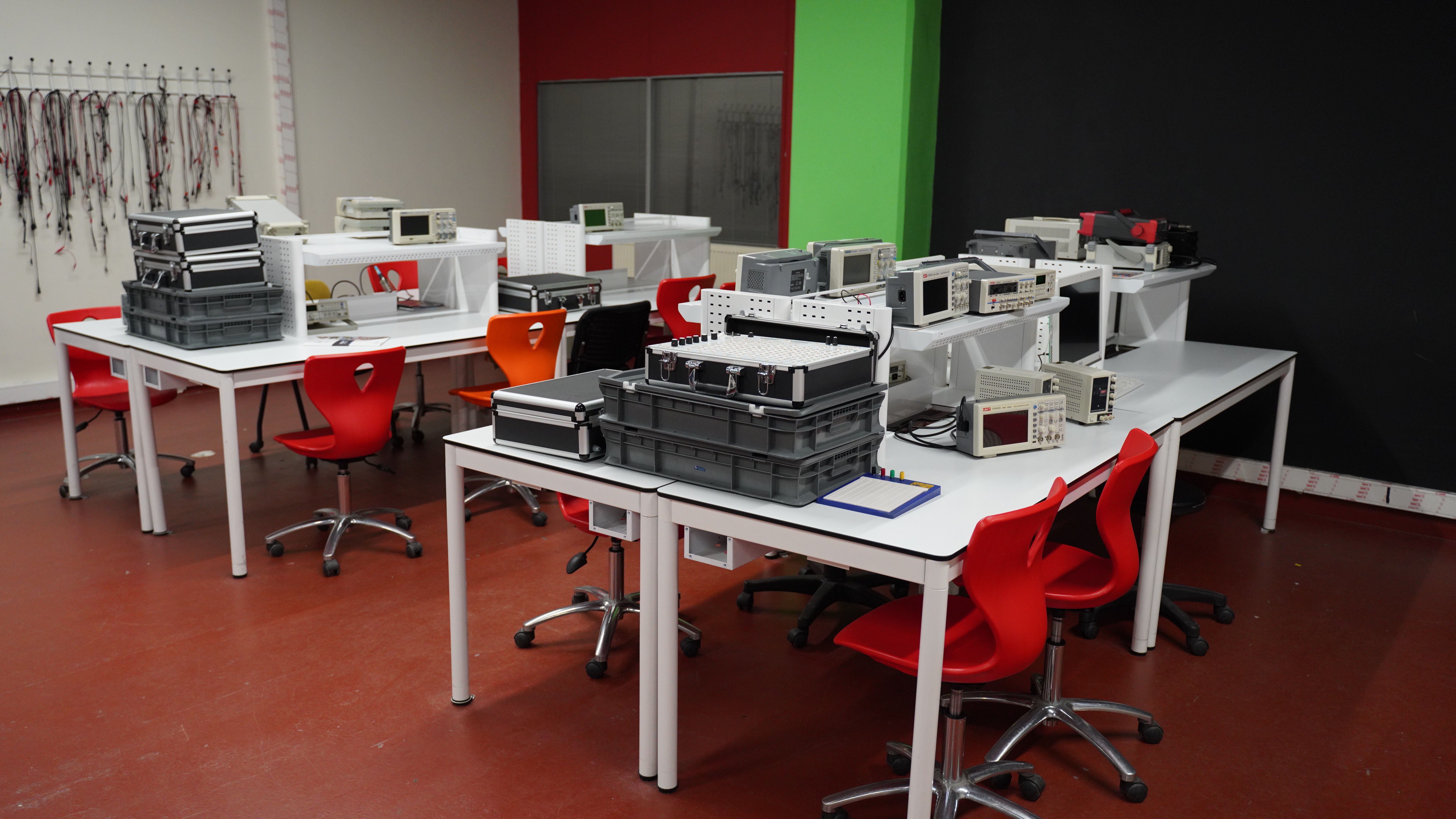
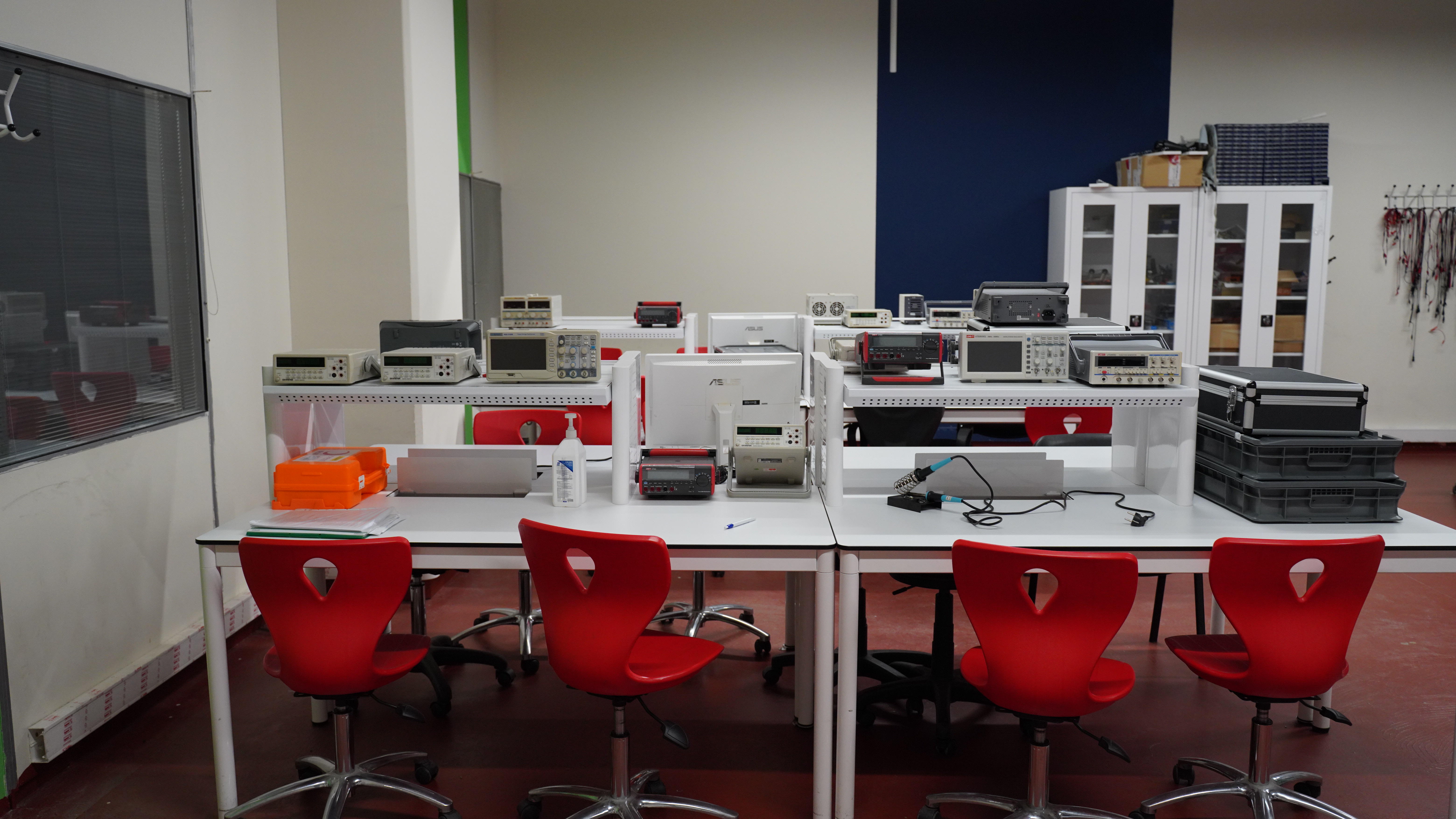
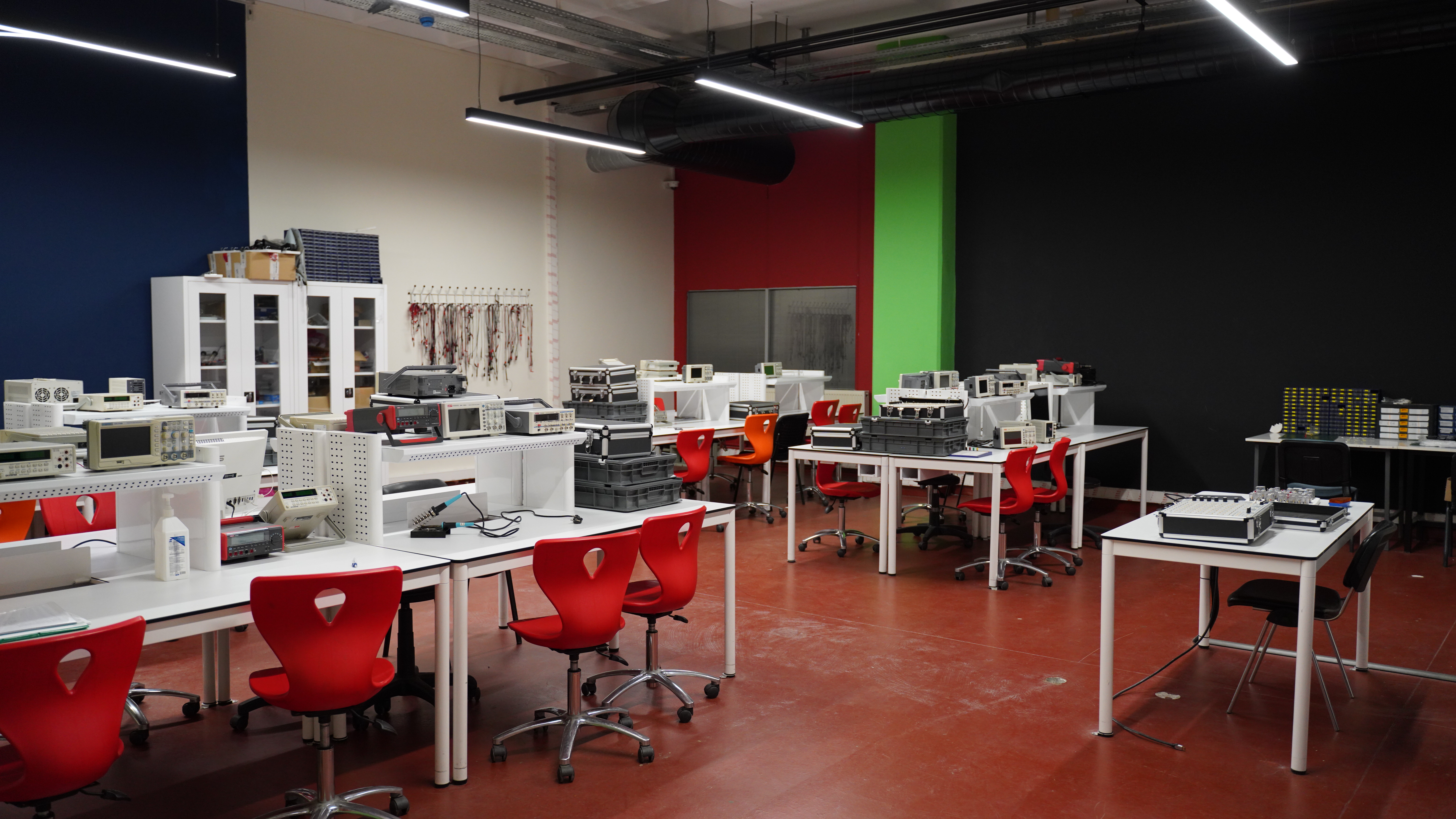
Basic electrical and electronic measurements are performed in our laboratory. Circuit applications are carried out using components such as resistors, capacitors, inductors, diodes, and transistors. The desired voltage is applied to the circuit using a power supply. An oscilloscope is available to analyze the behavior of circuit components. In addition, a function generator is available to apply signals of various forms and frequencies to circuit components. Handheld and benchtop multimeters are used to measure various values of the components. Furthermore, electronic circuits can be built using a plug-and-play approach with perforated boards, and electronic circuit board designs can also be created by soldering on perforated plates.
Click here to view the list of equipment in the Electronics Laboratory.
Communication and Microprocessor Laboratory
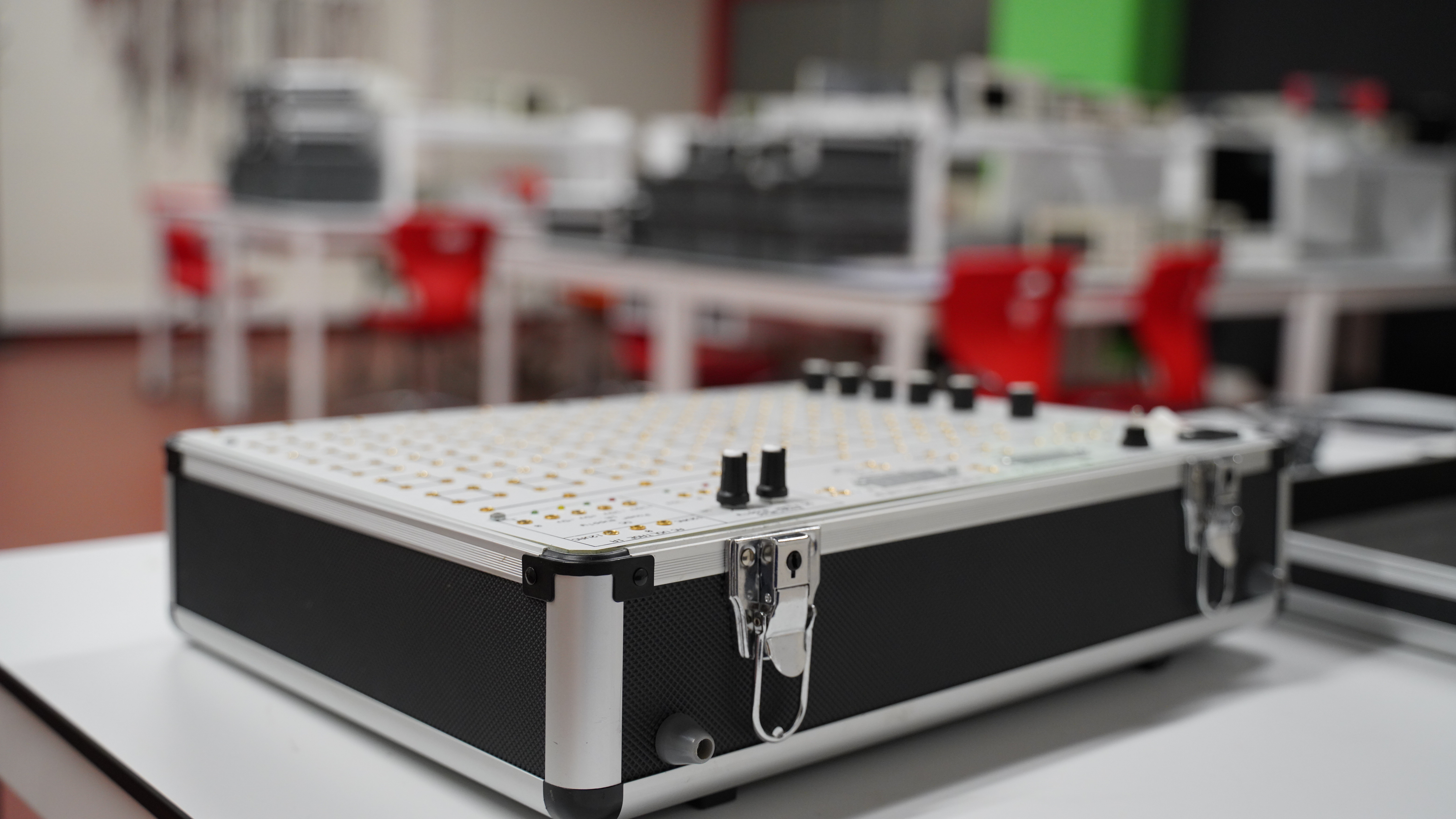
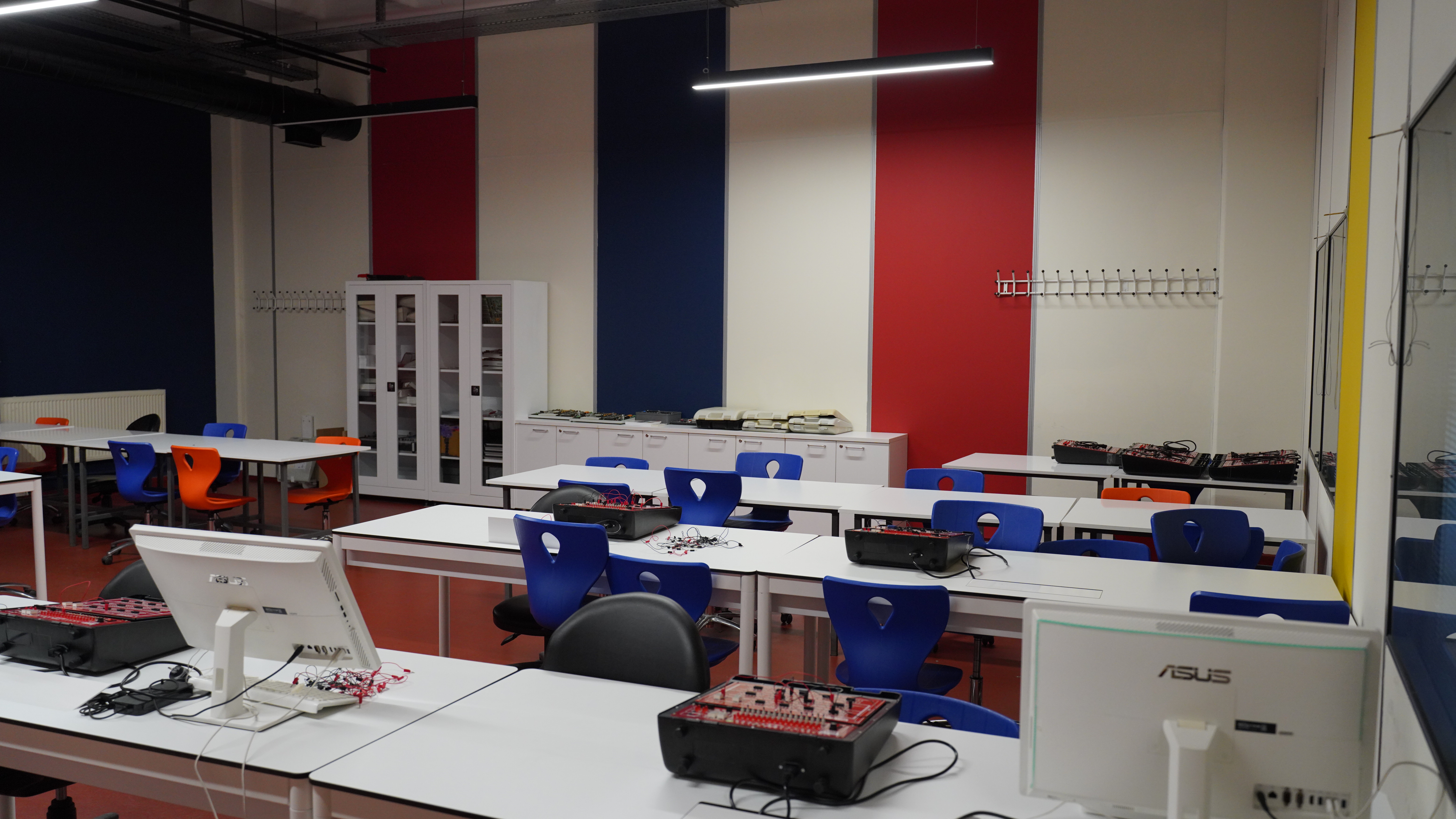
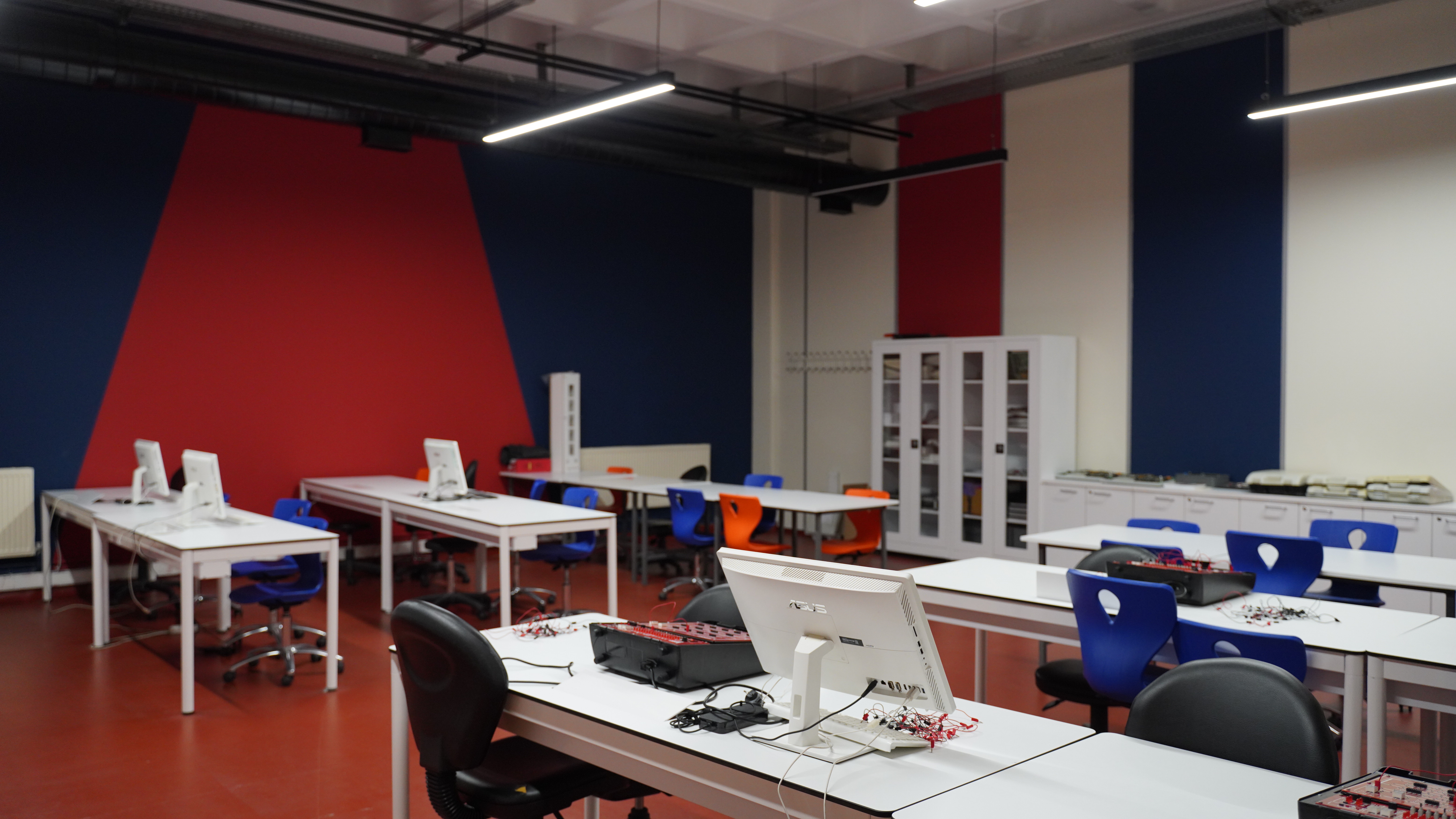
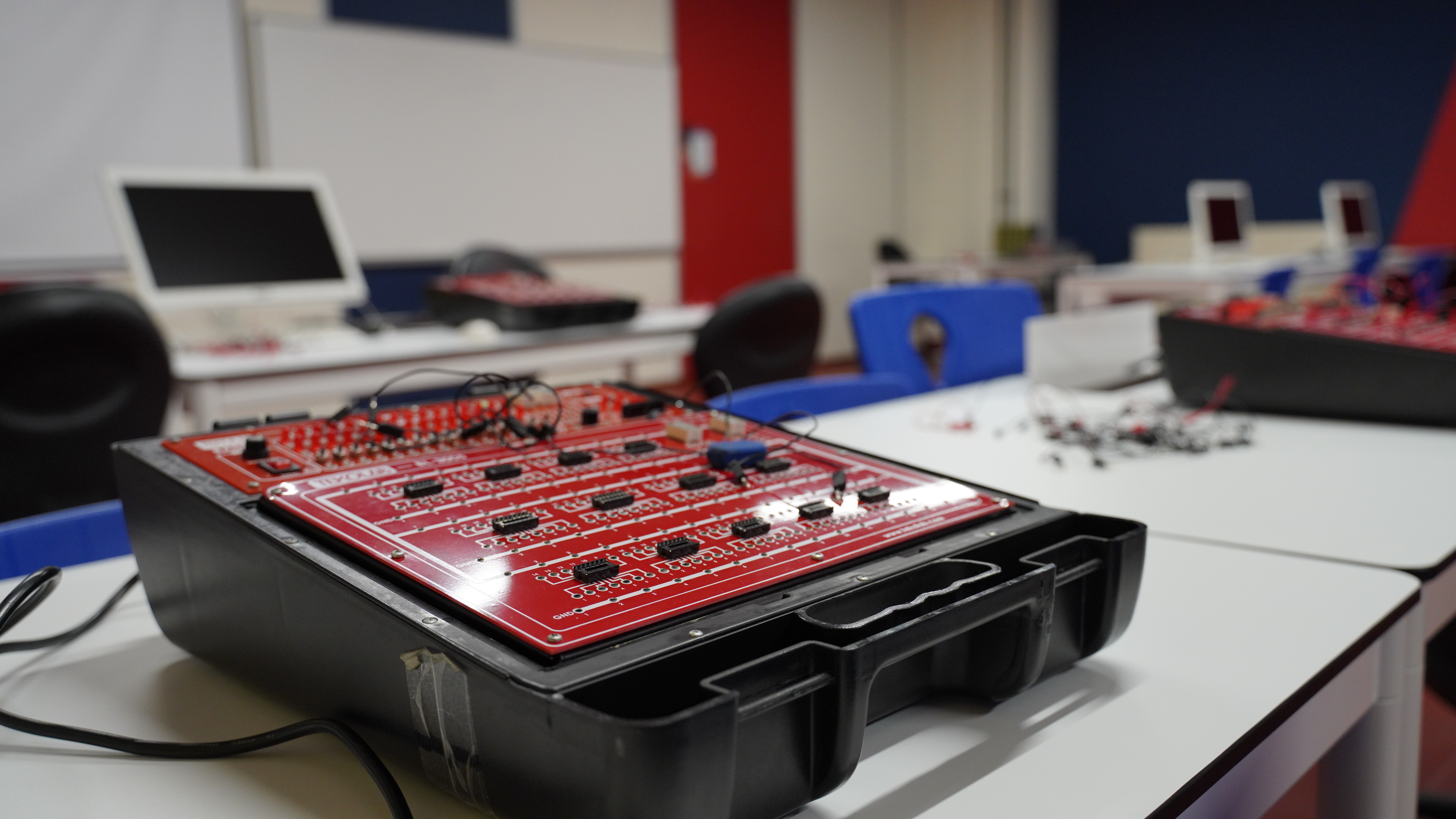
This laboratory is equipped with a PIC microcontroller training kit from Microchip. This kit is used to develop applications for the PIC 16F877 microcontroller. Communication applications are also developed using communication kits. The logic training kit enables the development of logic applications using the necessary integrated circuits.
Click here to view the equipment list for the Communication and Microprocessor Laboratory.
Electrical Machinery and Electrical Facilities Laboratory
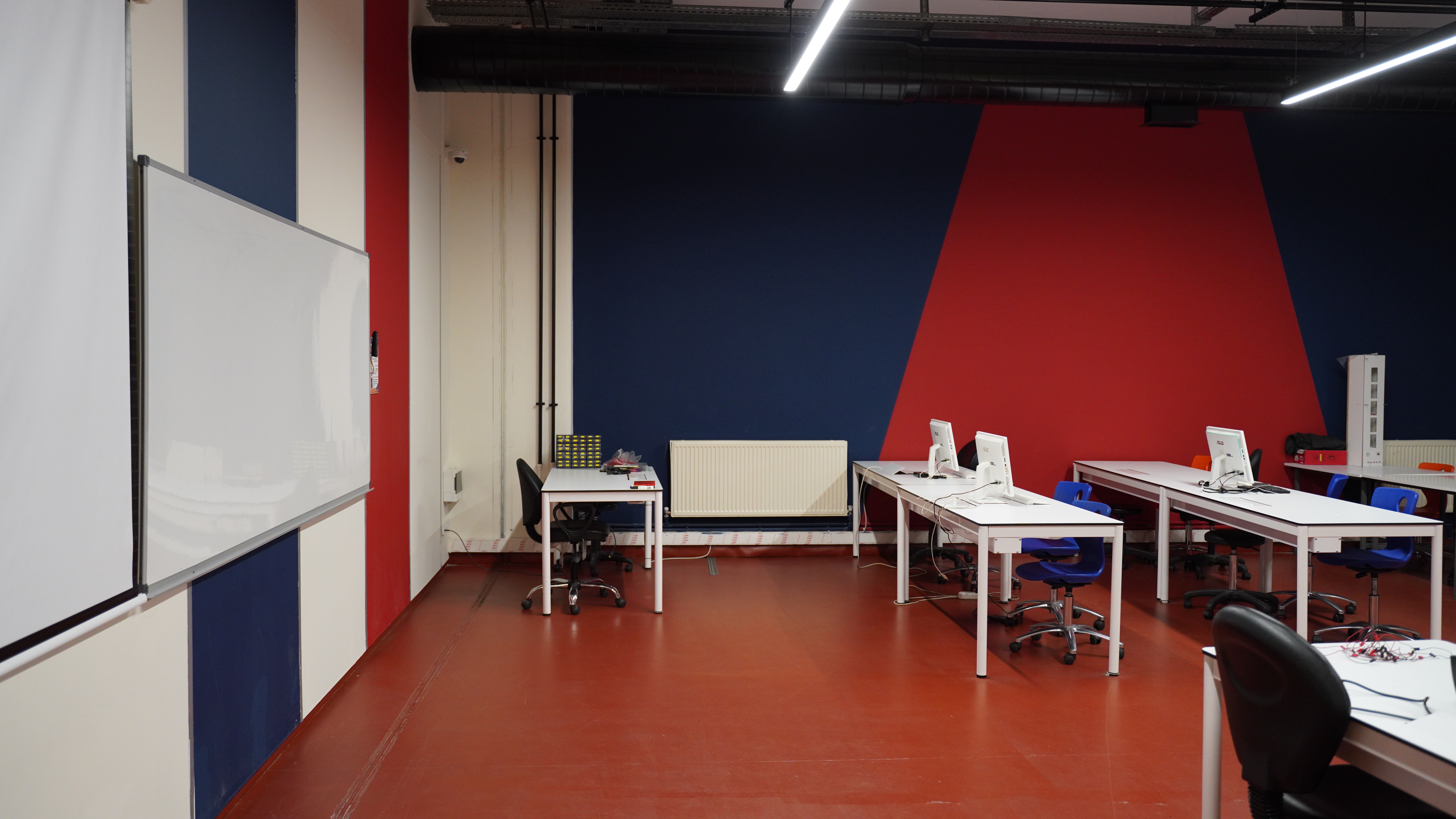
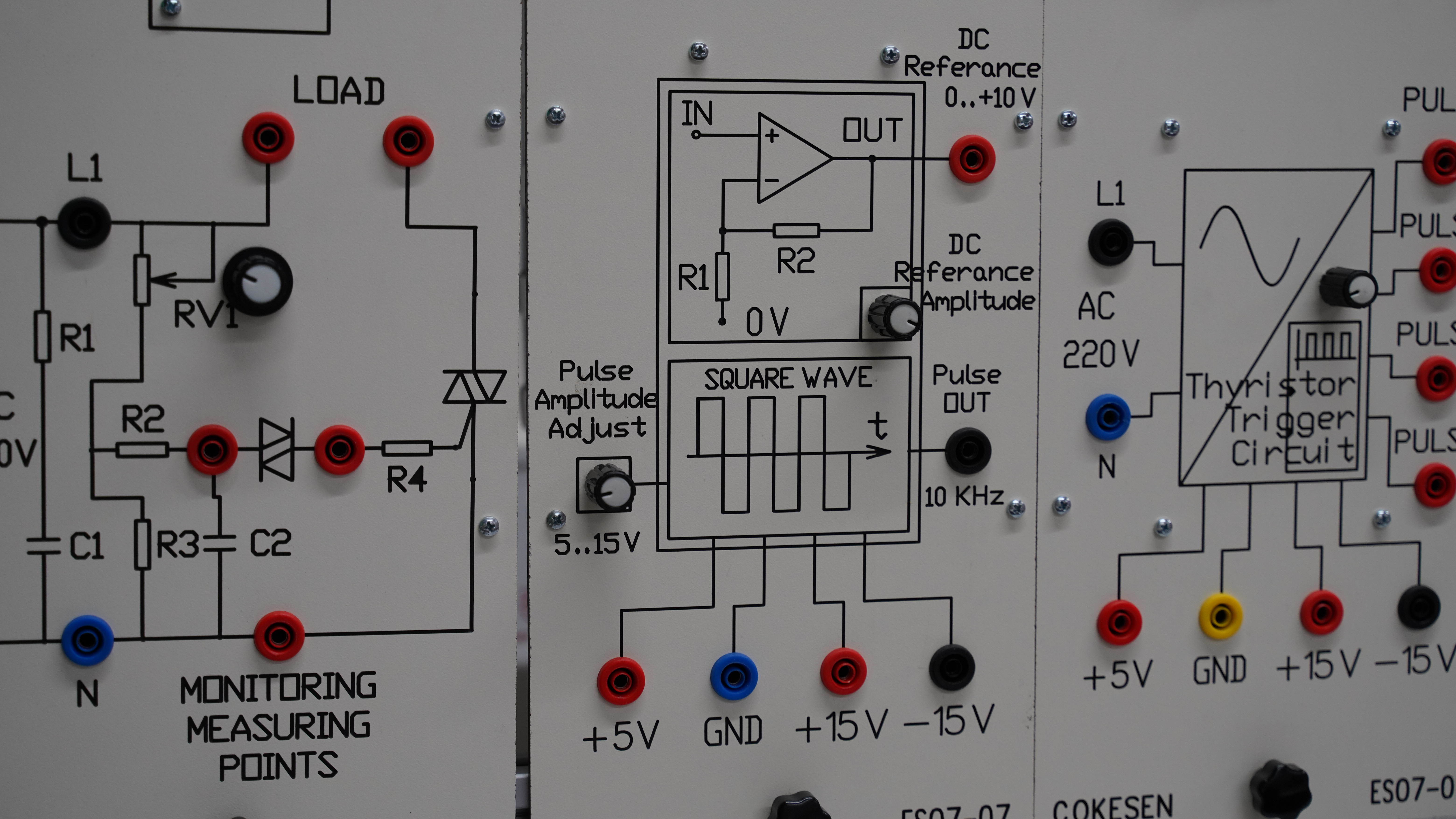
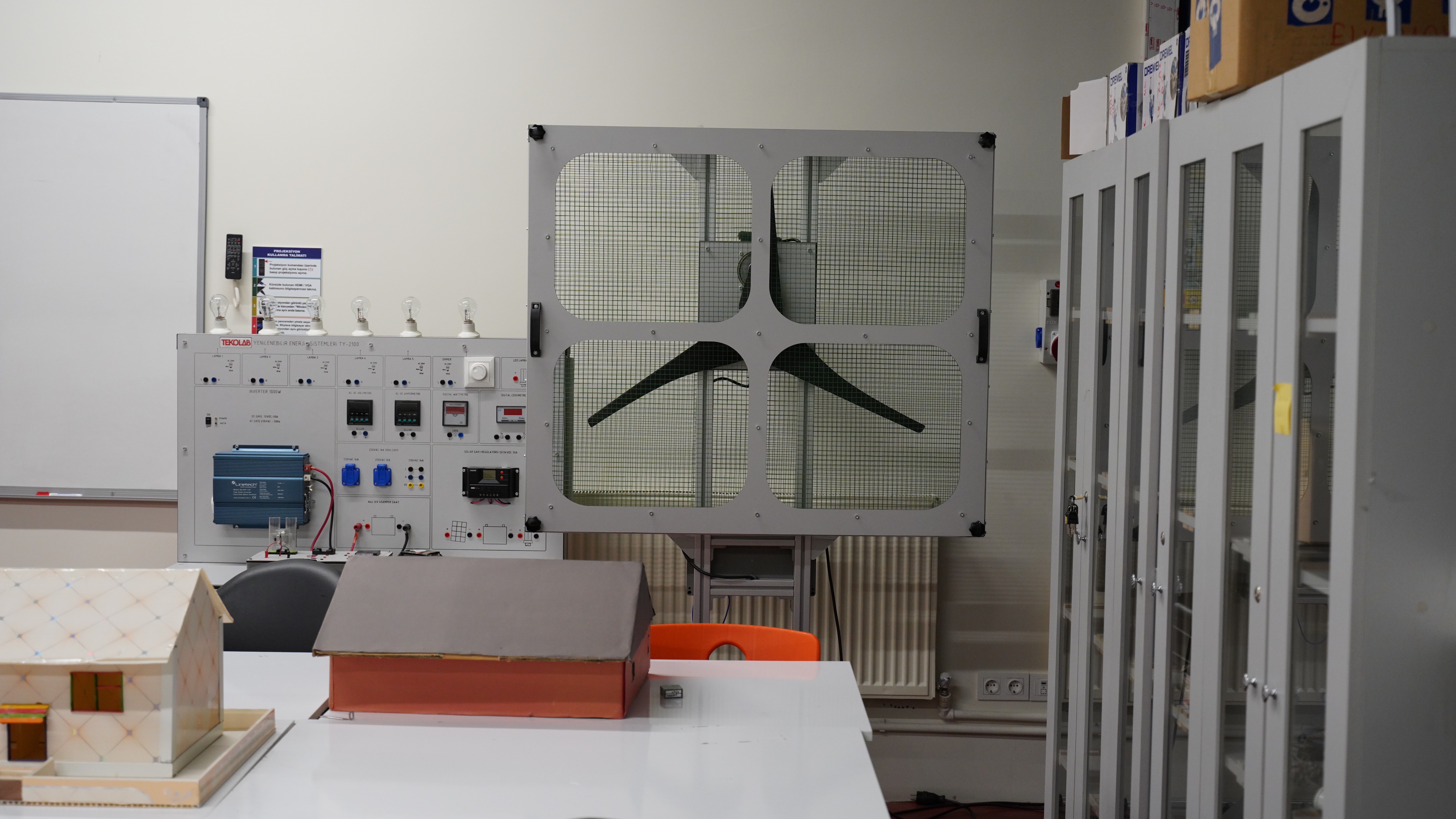
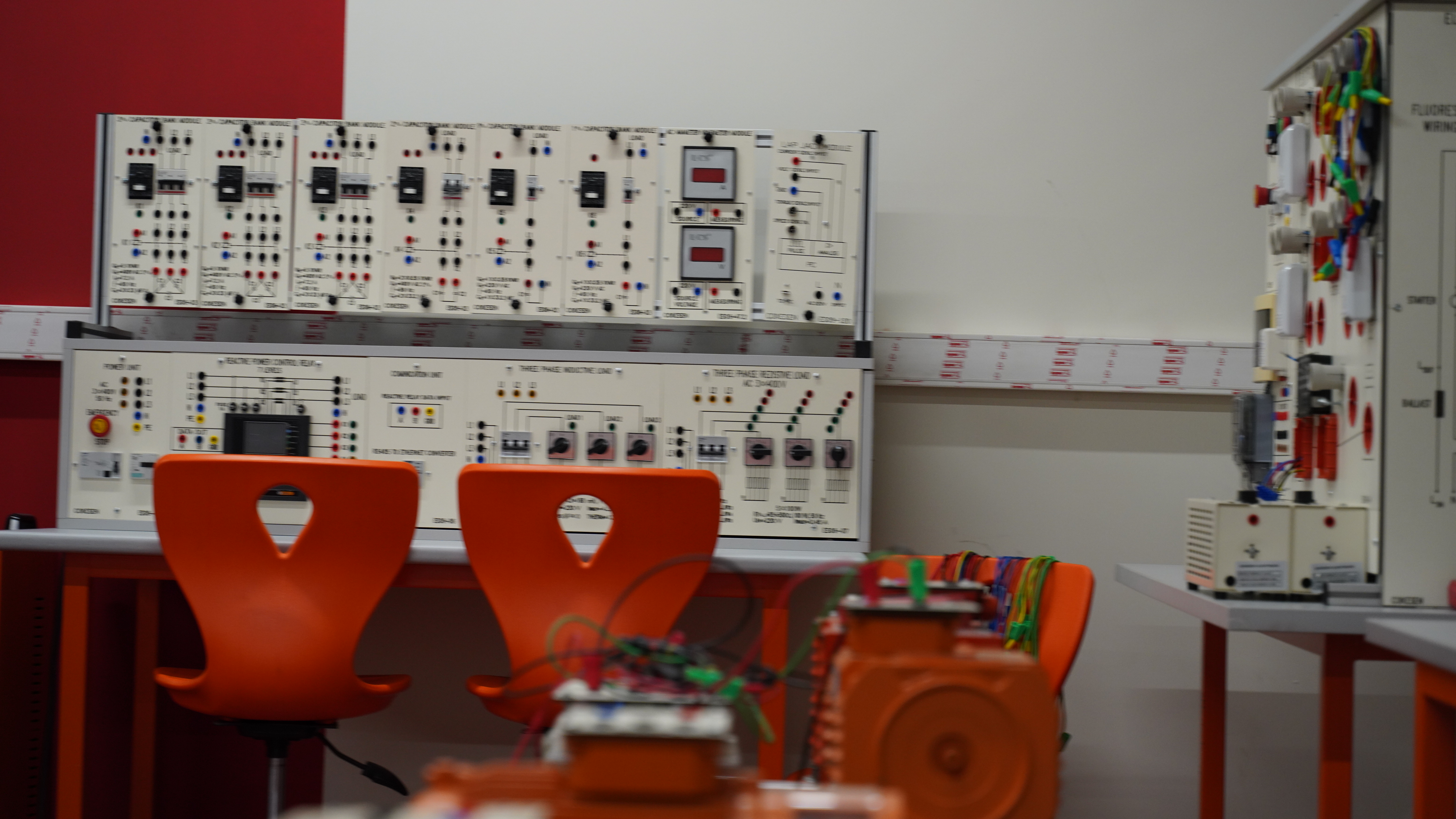
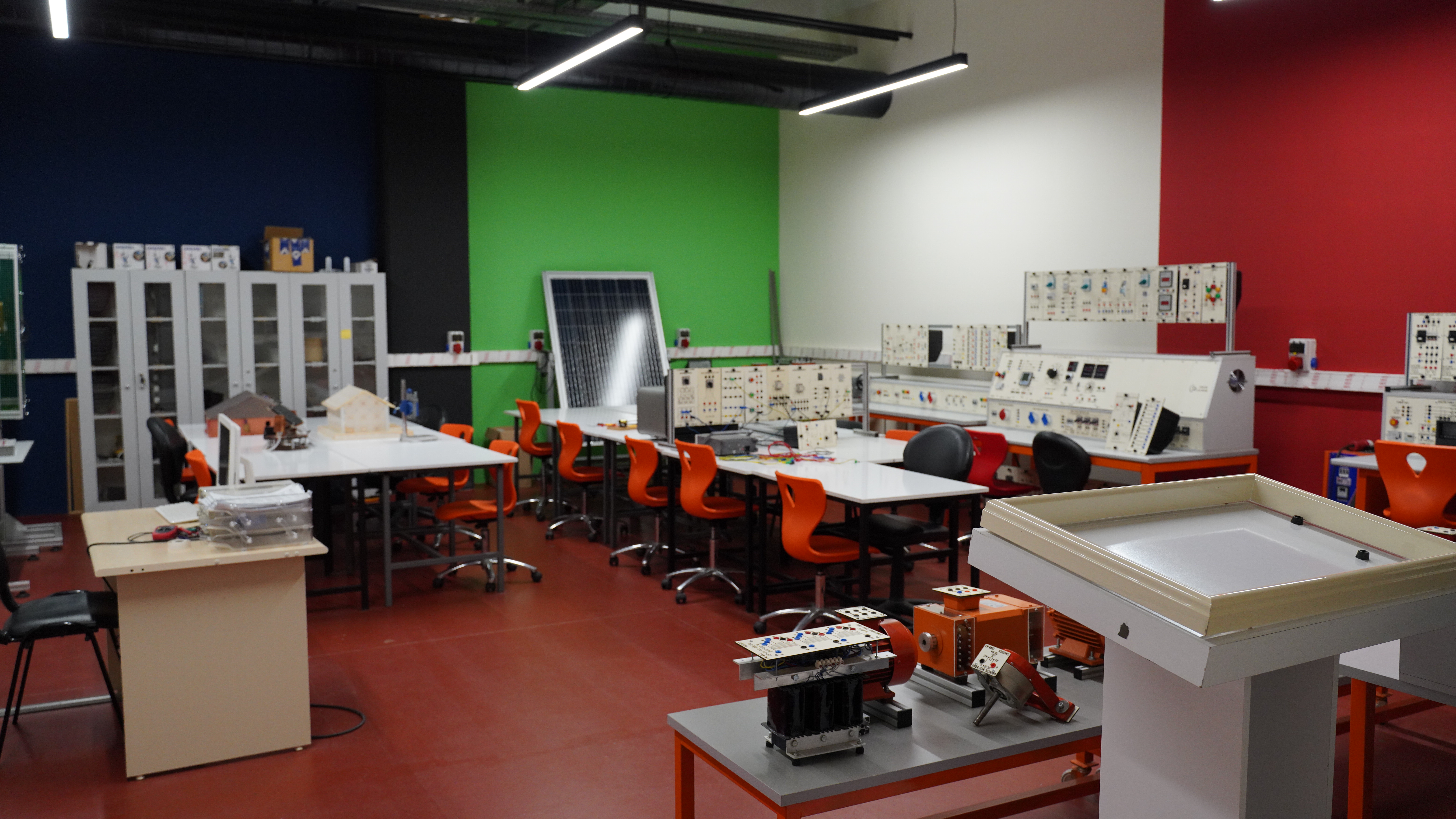
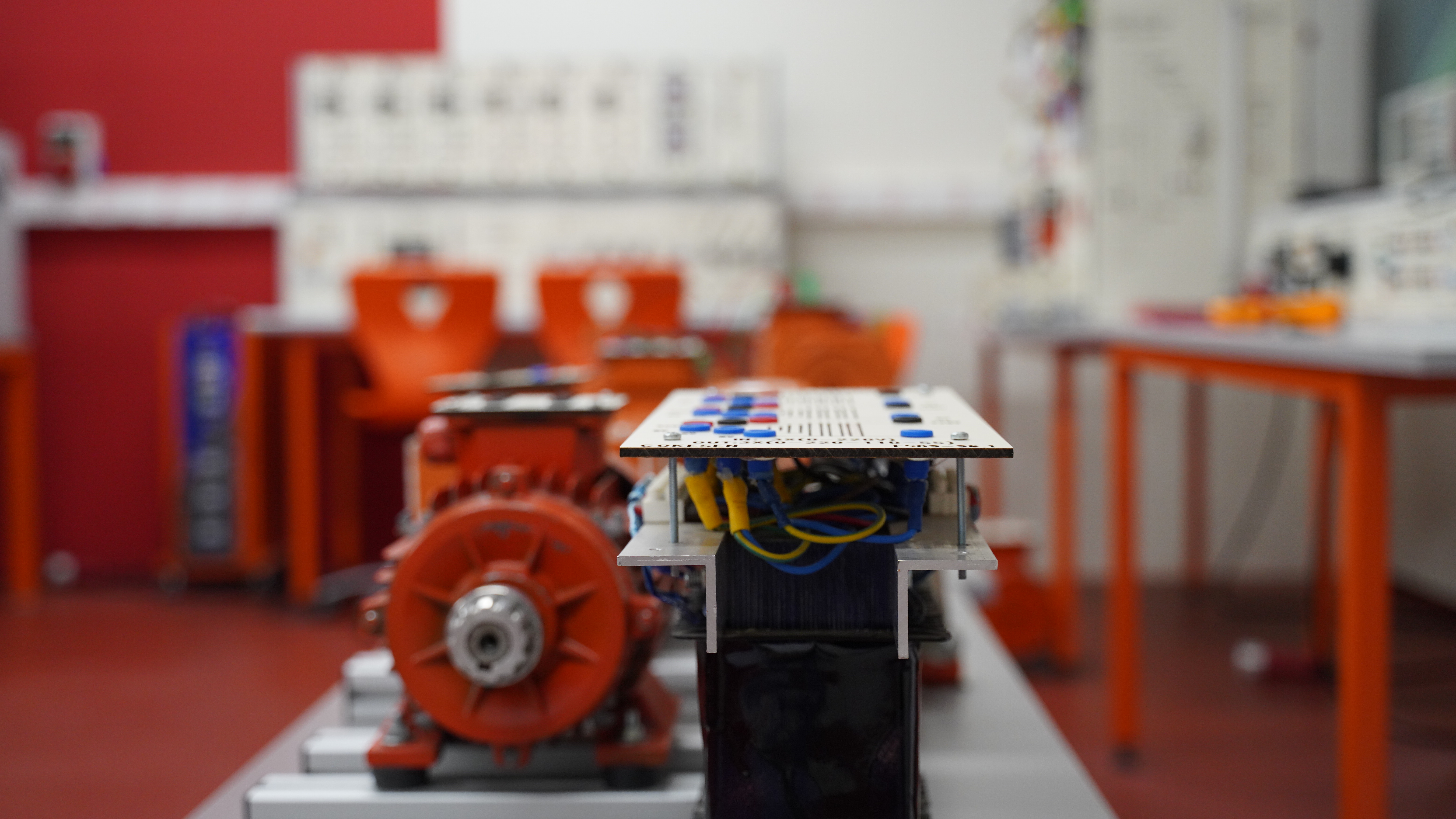
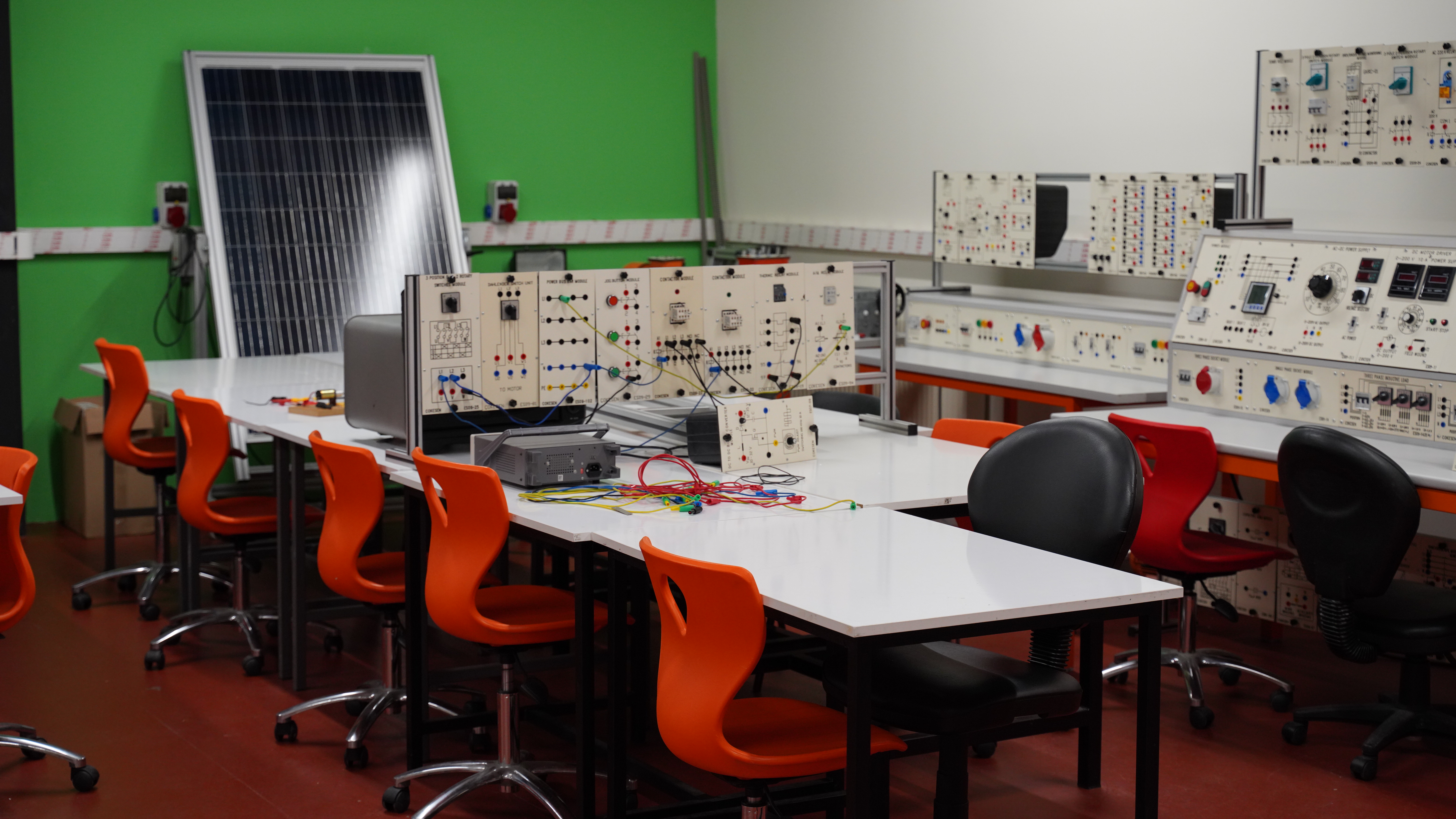
Our laboratory is equipped to conduct solar panel and wind turbine experiments. Using the wiring kits, students can set up both low-voltage systems—such as intercom systems and automatic door systems for apartment buildings—and high-voltage systems, including stairwell automation, interior lighting, and electrical outlet installations. Our laboratory also features a power electronics kit, a power factor correction kit, an electric motors and transformers kit, a circuits kit, and motor control kits. Students conduct practical exercises in these areas.
Click here to view the equipment list for the Electrical Machinery and Electrical Facilities Laboratory.
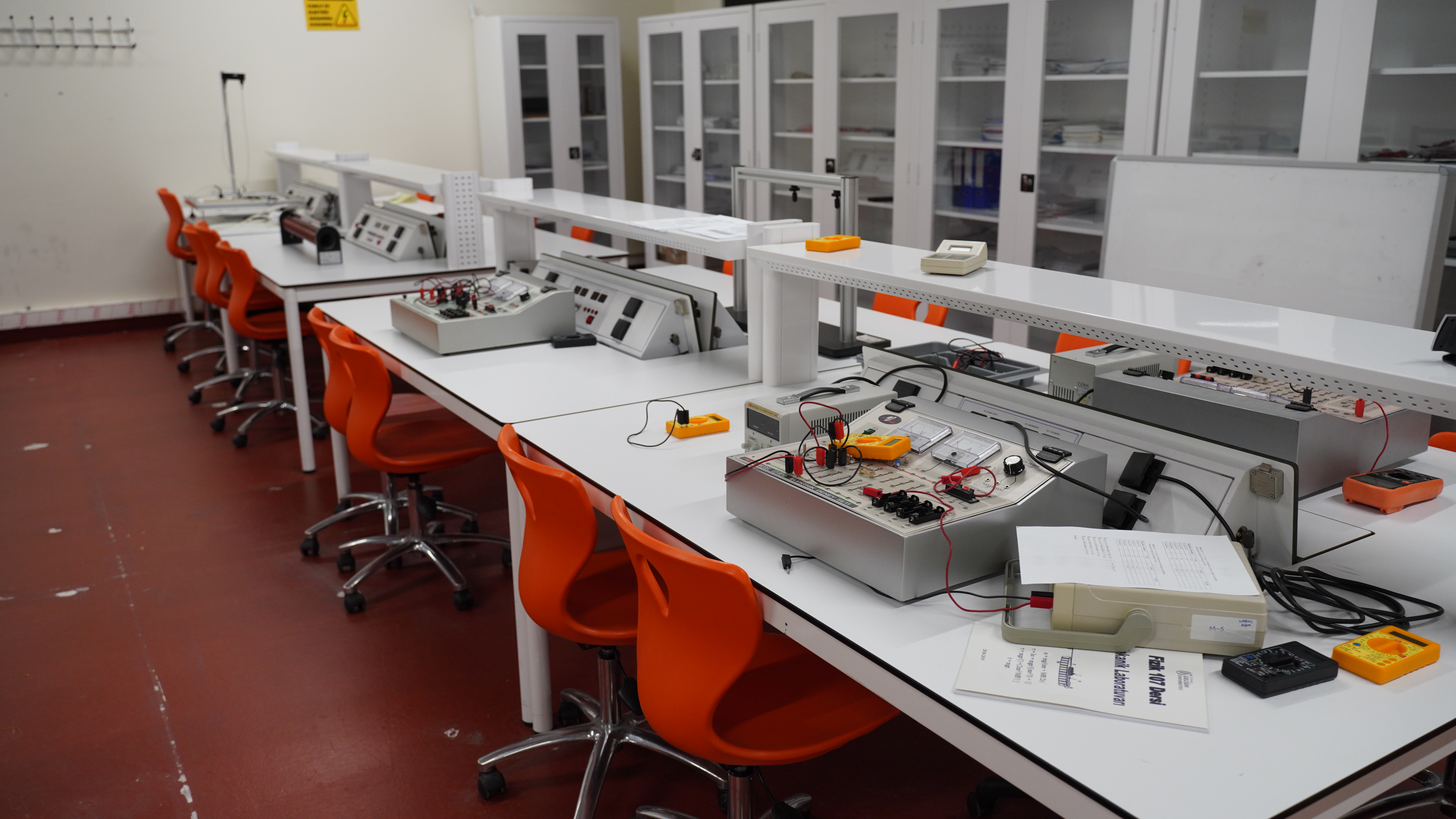
Physics Laboratory
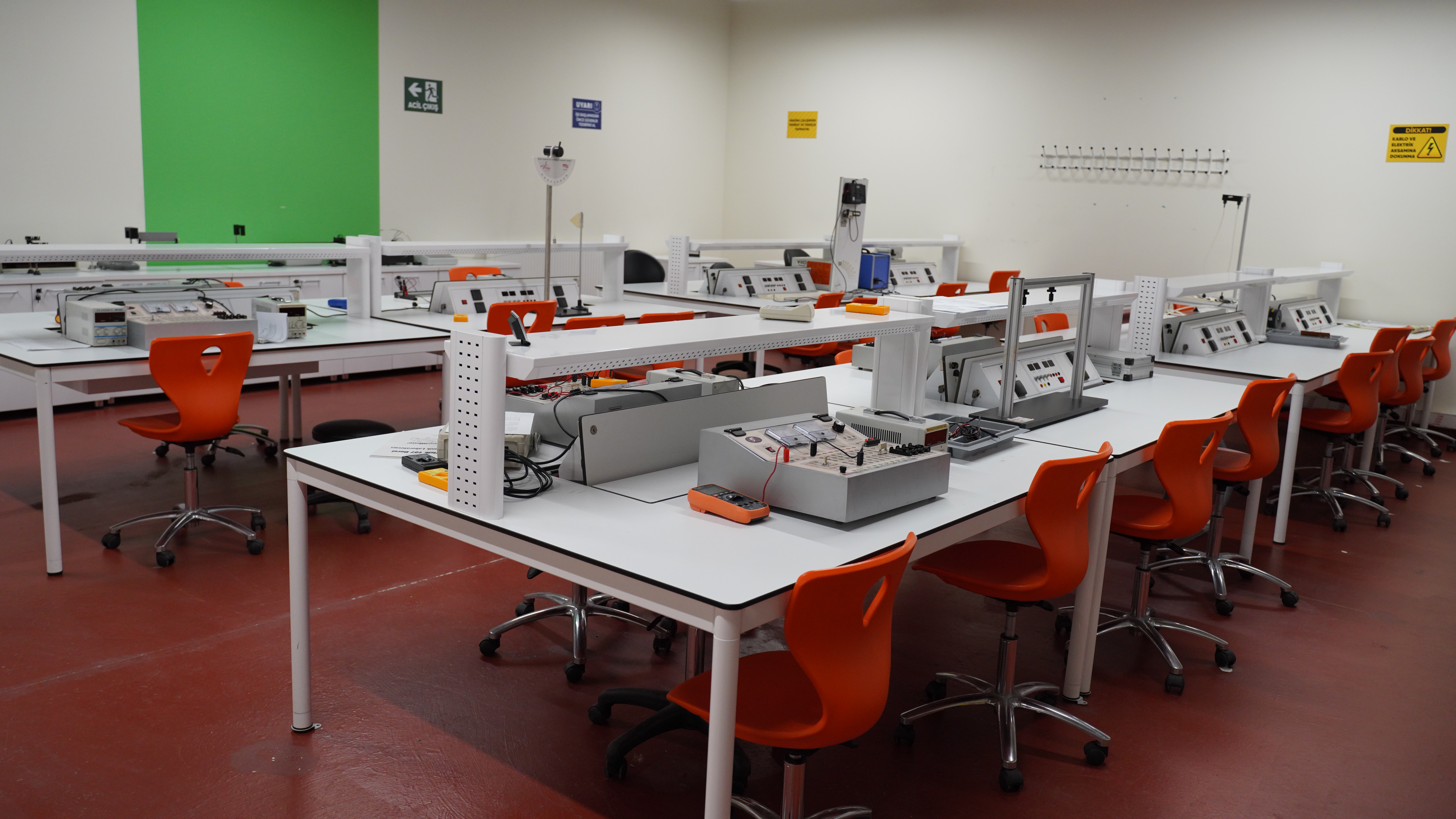
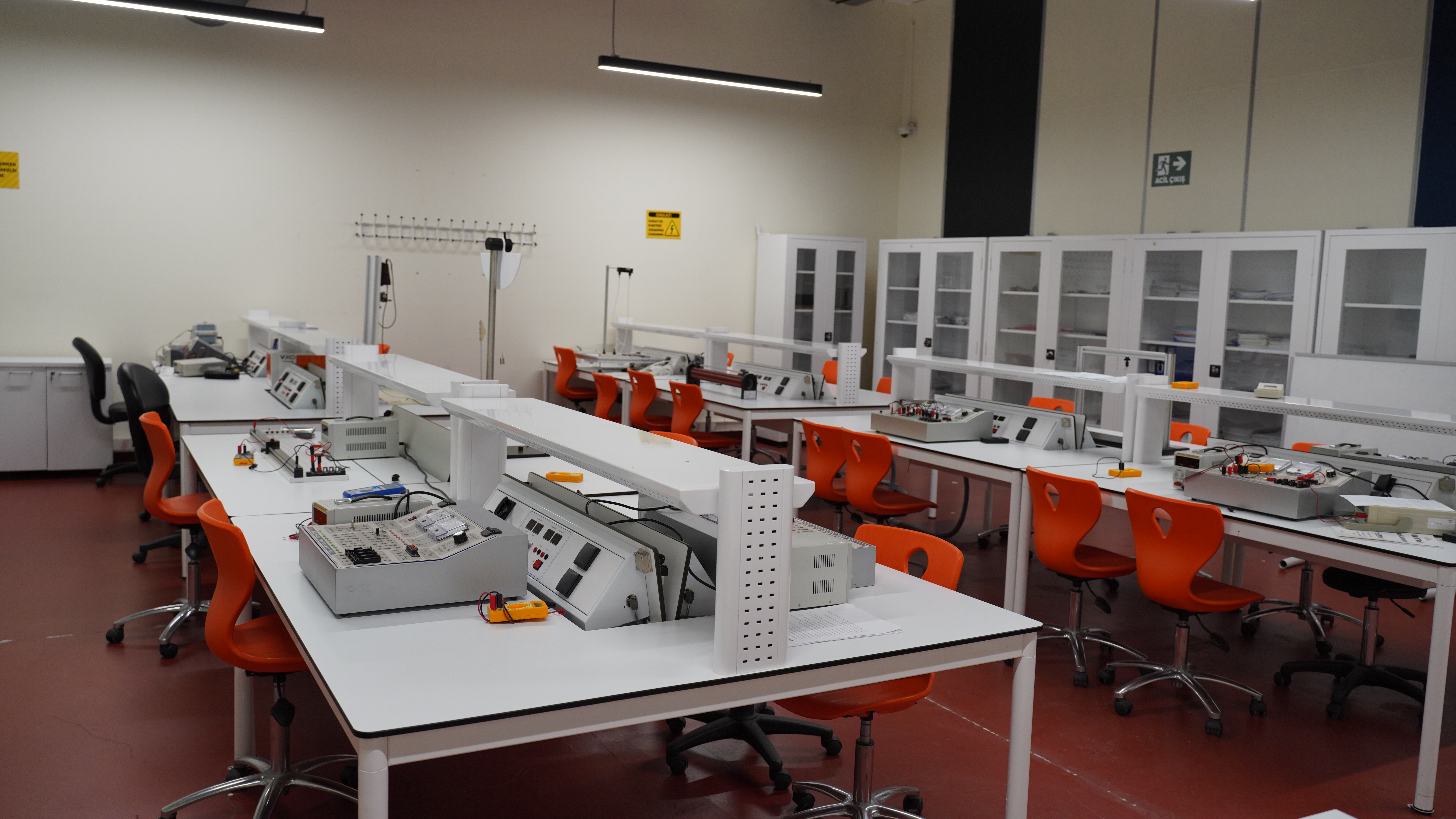
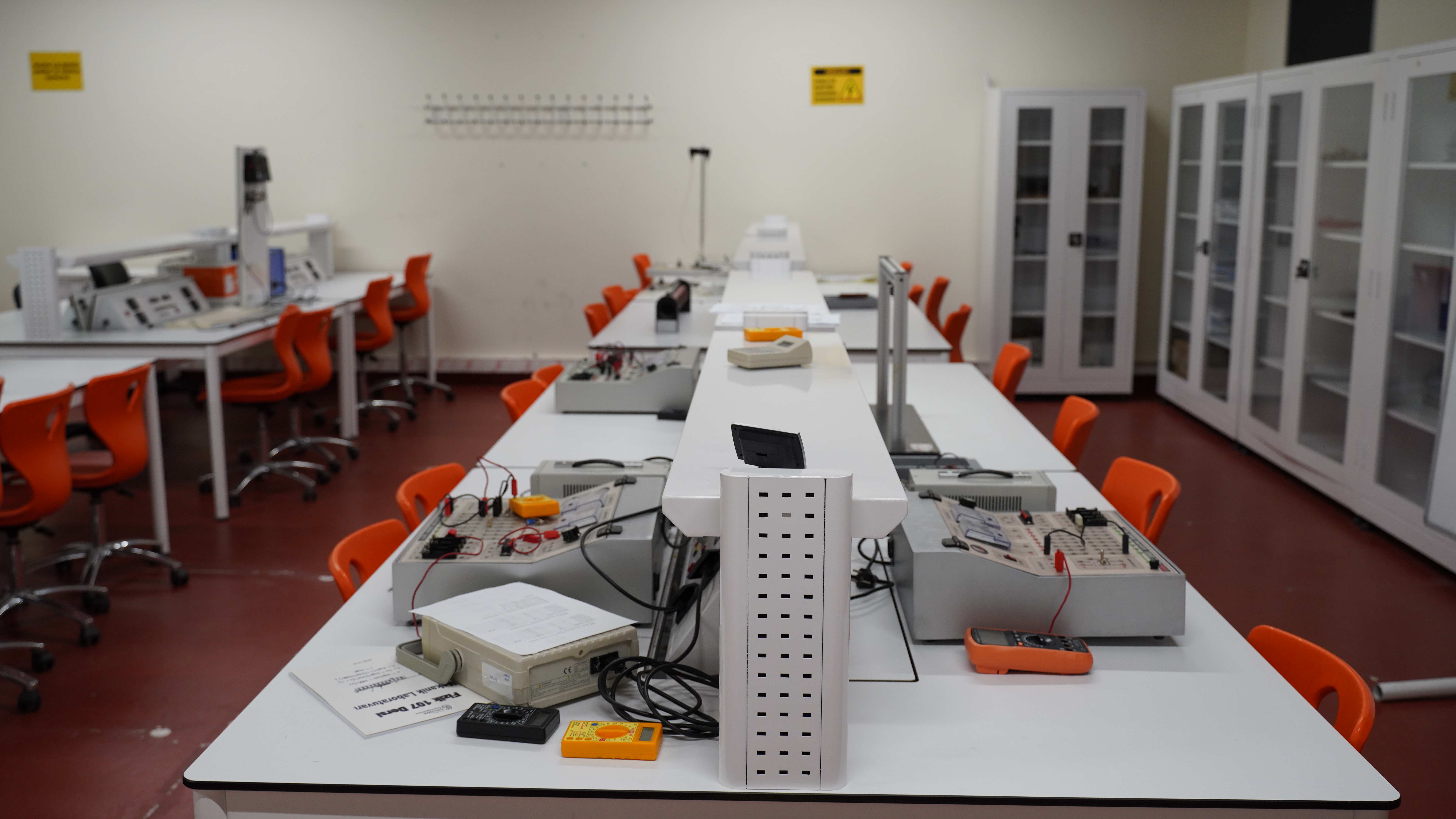
In the physics laboratory, fundamental mechanics and basic applications of electricity and magnetism are conducted for all engineering departments. This laboratory is of great importance for understanding physics, which serves as the foundation for courses such as electricity, statics, dynamics, and thermodynamics, and contributes to daily life from an engineering perspective.
In the laboratory, topics such as Measurement, Measurement Standards and Measurement Uncertainty, Free Fall, Simple Pendulum, Newton’s Laws of Motion, Hooke’s Law, Elastic and Inelastic Collisions, Ohm’s Law, Kirchhoff’s Laws, Charging and Discharging a Capacitor, Magnetic Induction, Resonance Circuits, and the Wheatstone Bridge.
Computer Laboratory
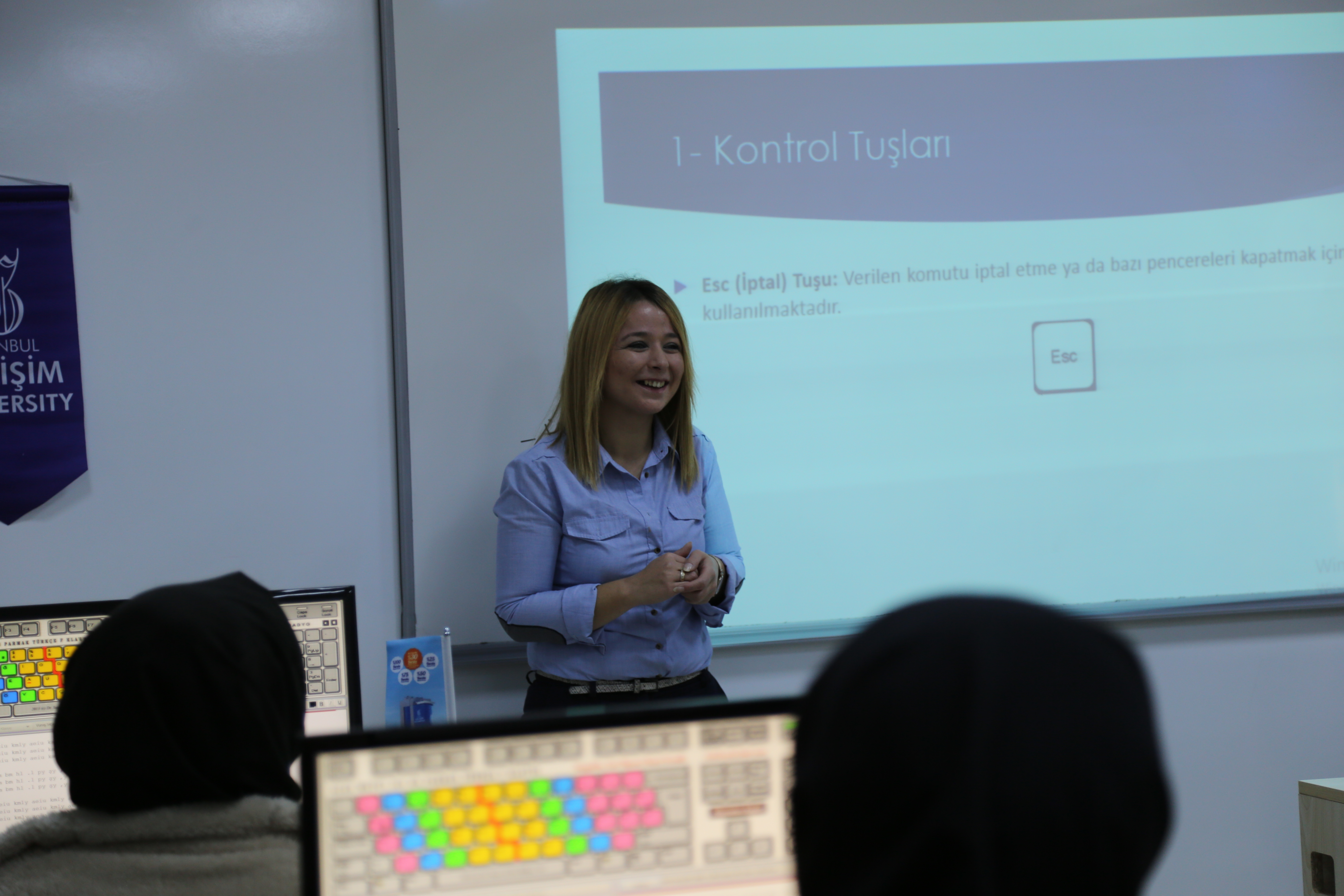
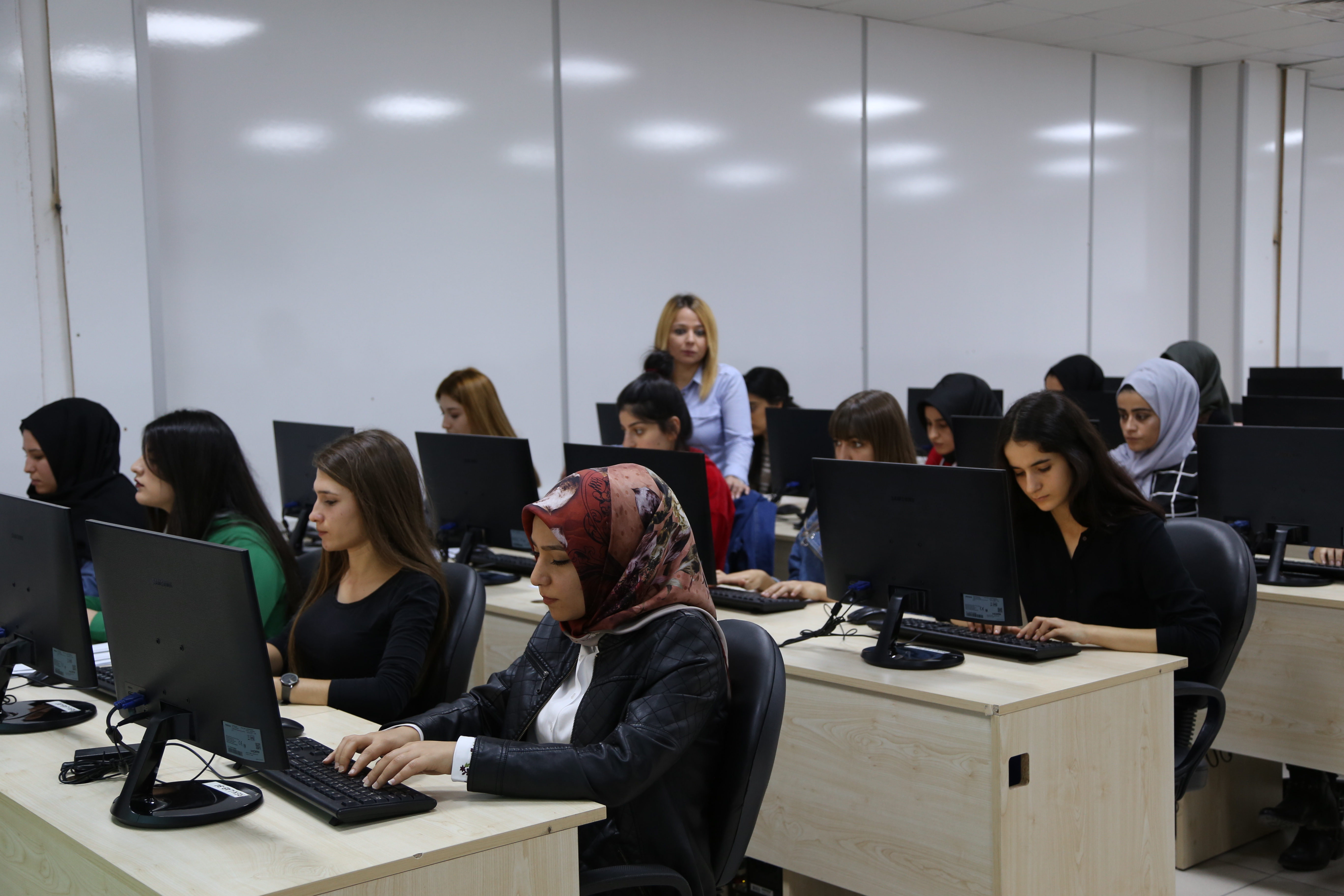
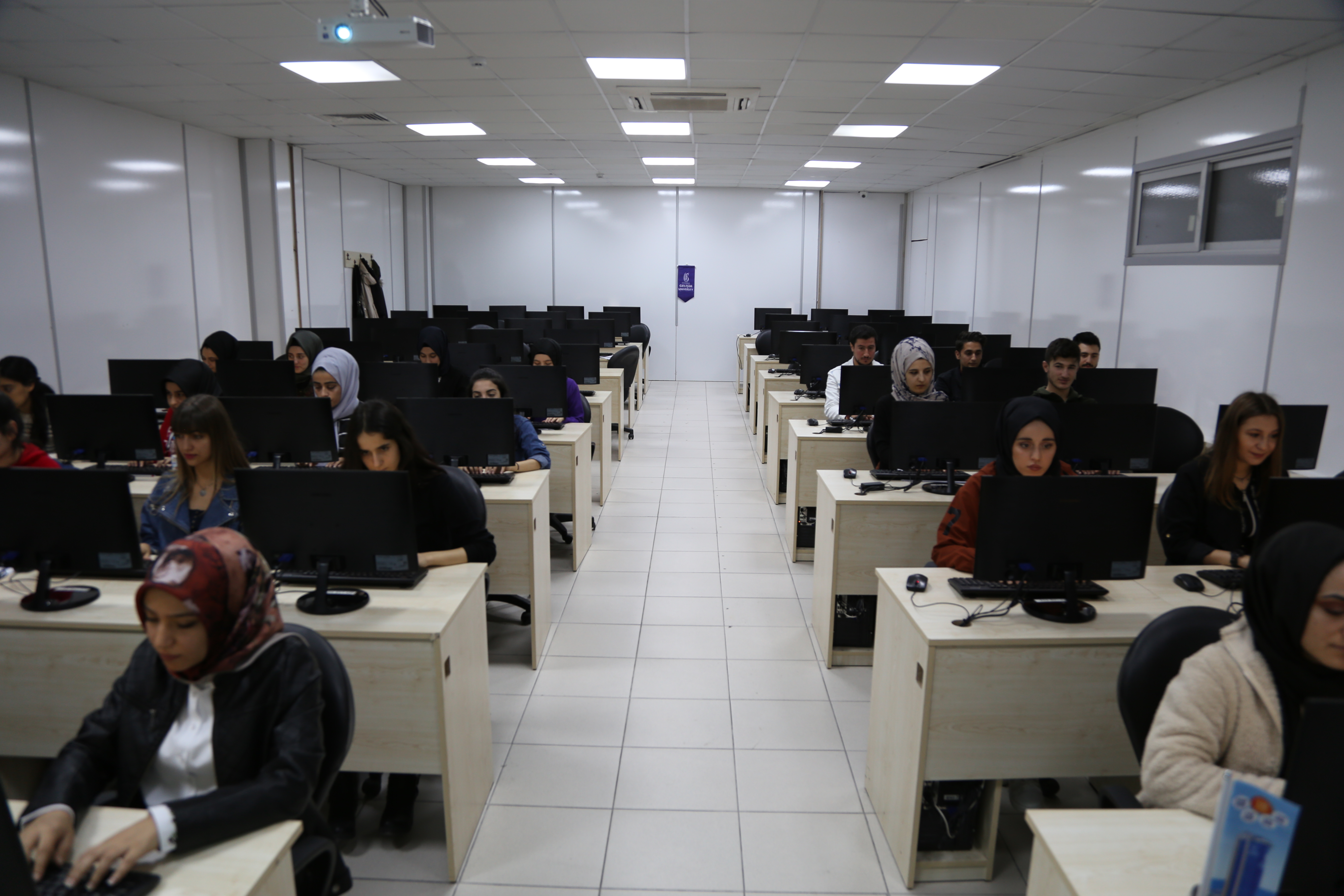
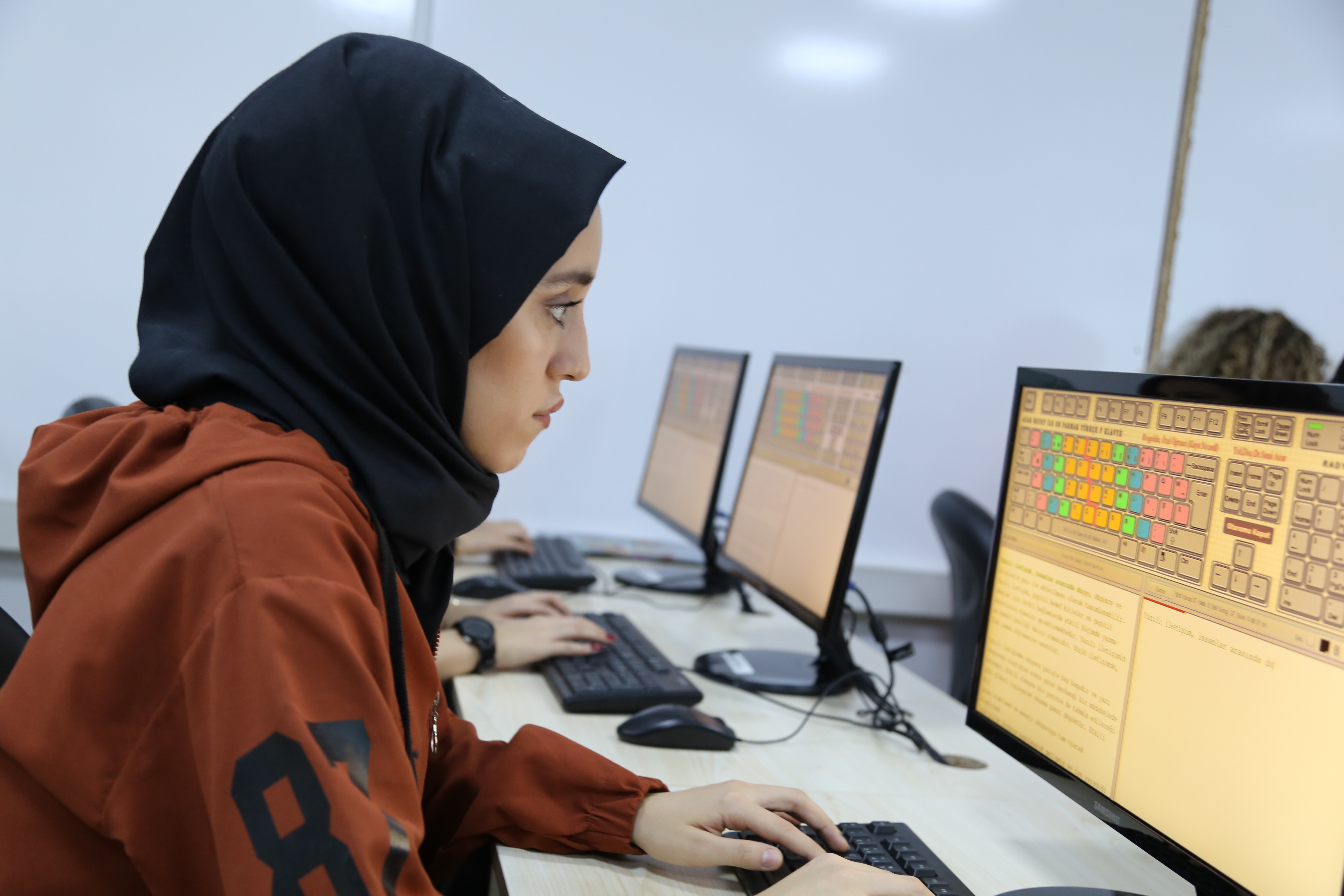
Our faculty has six spacious laboratories, each accommodating 60 people, equipped with ventilation systems and designed to run the programs of the relevant departments smoothly. Our Faculty of Engineering and Architecture has six spacious computer labs, each with a capacity of 60 people, where students and researchers can carry out the programs of their respective departments without any issues. These labs provide an excellent environment for students and faculty to apply their theoretical knowledge and carry out their projects.
Each laboratory is equipped with a modern and ergonomic design. In addition, they have been carefully planned to meet students’ current educational and research needs, featuring computers and software updated with the latest technology. With a user-friendly and student-centered approach, these laboratories make the learning process more effective and efficient.
The laboratories’ ventilation systems have been carefully designed to ensure that students and researchers have a healthy and comfortable working environment. The system optimizes indoor air quality and reduces the ecological footprint by increasing energy efficiency.
In addition, the laboratories are used for regularly organized events and workshops designed to enhance students’ and faculty members’ social and collaborative learning experiences. This provides students with the opportunity to interact with experts from various disciplines and exchange knowledge.
As a result, the spacious and well-equipped computer labs offered by our Faculty of Engineering and Architecture support the successful and productive work of students and researchers and contribute to their academic and professional development.
In the Mechanical/Industrial Automation Laboratory, PLC (Programmable Logic Controller) kits, Festo sensor kits, servo motor drive technologies, mobile robots, systems for industrial automation (transfer, assembly, distribution, processing, and sorting stations), control systems, and hydraulic, electrohydraulic, and pneumatic-electropneumatic systems are available. In addition, students can use the 3D printer in the lab to produce various parts for robots, drones, and other applications.
In our laboratories, All-in-One computers equipped with 6th-generation Intel processors make it easy to program various development boards and run a variety of simulation programs. In line with advancing technology and to meet industrial needs, we implement industrial automation applications.
Click here to view the equipment list for the Mechanical/Industrial Automation Laboratory.
Machining-Chipless Manufacturing Methods Laboratory
Reflecting the “mechanical” nature of Mechatronics Engineering, this laboratory provides workshop activities involving production technologies such as formers, bending and pressing machines, lathes, drilling machines, radial drill presses, cutters, guillotine shears, saws, grinding machines, and welding machines. In this laboratory, students can bring their own designs to life while also having the opportunity to work on their final projects.
Click here to view the equipment list for the Machining-Chipless Manufacturing Methods Laboratory.
Electronics Laboratory
Basic electrical and electronic measurements are performed in our laboratory. Circuit applications are carried out using components such as resistors, capacitors, inductors, diodes, and transistors. The desired voltage is applied to the circuit using a power supply. An oscilloscope is available to analyze the behavior of circuit components. In addition, a function generator is available to apply signals of various forms and frequencies to circuit components. Handheld and benchtop multimeters are used to measure various values of the components. Furthermore, electronic circuits can be built using a plug-and-play approach with perforated boards, and electronic circuit board designs can also be created by soldering on perforated plates.
Click here to view the list of equipment in the Electronics Laboratory.
Communication and Microprocessor Laboratory
This laboratory is equipped with a PIC microcontroller training kit from Microchip. This kit is used to develop applications for the PIC 16F877 microcontroller. Communication applications are also developed using communication kits. The logic training kit enables the development of logic applications using the necessary integrated circuits.
Click here to view the equipment list for the Communication and Microprocessor Laboratory.
Electrical Machinery and Electrical Facilities Laboratory
Our laboratory is equipped to conduct solar panel and wind turbine experiments. Using the wiring kits, students can set up both low-voltage systems—such as intercom systems and automatic door systems for apartment buildings—and high-voltage systems, including stairwell automation, interior lighting, and electrical outlet installations. Our laboratory also features a power electronics kit, a power factor correction kit, an electric motors and transformers kit, a circuits kit, and motor control kits. Students conduct practical exercises in these areas.
Click here to view the equipment list for the Electrical Machinery and Electrical Facilities Laboratory.
Physics Laboratory
In the physics laboratory, fundamental mechanics and basic applications of electricity and magnetism are conducted for all engineering departments. This laboratory is of great importance for understanding physics, which serves as the foundation for courses such as electricity, statics, dynamics, and thermodynamics, and contributes to daily life from an engineering perspective.
In the laboratory, topics such as Measurement, Measurement Standards and Measurement Uncertainty, Free Fall, Simple Pendulum, Newton’s Laws of Motion, Hooke’s Law, Elastic and Inelastic Collisions, Ohm’s Law, Kirchhoff’s Laws, Charging and Discharging a Capacitor, Magnetic Induction, Resonance Circuits, and the Wheatstone Bridge.
Computer Laboratory
Our faculty has six spacious laboratories, each accommodating 60 people, equipped with ventilation systems and designed to run the programs of the relevant departments smoothly. Our Faculty of Engineering and Architecture has six spacious computer labs, each with a capacity of 60 people, where students and researchers can carry out the programs of their respective departments without any issues. These labs provide an excellent environment for students and faculty to apply their theoretical knowledge and carry out their projects.
Each laboratory is equipped with a modern and ergonomic design. In addition, they have been carefully planned to meet students’ current educational and research needs, featuring computers and software updated with the latest technology. With a user-friendly and student-centered approach, these laboratories make the learning process more effective and efficient.
The laboratories’ ventilation systems have been carefully designed to ensure that students and researchers have a healthy and comfortable working environment. The system optimizes indoor air quality and reduces the ecological footprint by increasing energy efficiency.
In addition, the laboratories are used for regularly organized events and workshops designed to enhance students’ and faculty members’ social and collaborative learning experiences. This provides students with the opportunity to interact with experts from various disciplines and exchange knowledge.
As a result, the spacious and well-equipped computer labs offered by our Faculty of Engineering and Architecture support the successful and productive work of students and researchers and contribute to their academic and professional development.